Kids Cycle Training Wheels (Side Wheels): When to Use and Remove Them
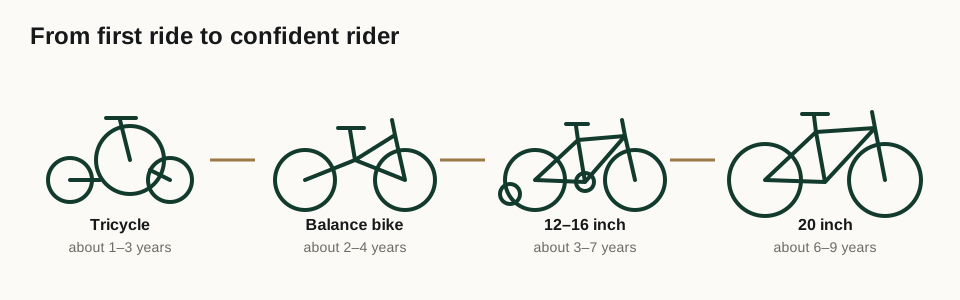
Training wheels (side wheels or stabilisers) are two small wheels fitted beside the rear wheel of a 12–20 inch kids' cycle. They help a child learn to pedal and steer, but they stop the cycle leaning, so children don't learn balance. Use them briefly, raise them slightly as confidence grows, and remove them once your child pedals and brakes well — often after a few weeks.
- Fit 12–20 inch kids' cycles
- Teach pedalling, not balance
- Raise slightly over time
- Remove after a few weeks
Training wheels — also called side wheels or stabilisers — are the classic way children in Pakistan start cycling. They have a place, but they're best treated as a short first step rather than something to keep for years.
How training wheels work
Two small wheels bolt onto the rear axle, one on each side. They hold the cycle upright, so your child can focus on pedalling, steering and braking. The downside: because the cycle can't lean, children don't learn balance — and leaning is how a cycle actually turns.
Fitting training wheels correctly
- Match the size: side-wheel kits are made for 12, 14, 16 or 20 inch cycles. Check the axle fits.
- Level: both side wheels should sit at the same height.
- Height: start with both just touching the ground (or a few millimetres above).
- Tighten the axle nuts firmly — loose training wheels are a common cause of falls.
- Check weekly — brackets can bend after bumps.
Raising them over time
As your child gets confident, raise both wheels about 1–2 cm. The cycle will tip slightly onto one side wheel, and your child starts to feel balance. Raise again after a week or two.
When to take training wheels off
Signs your child is ready:
- Pedals smoothly and steers around corners.
- Uses the brakes to stop on purpose.
- Rides leaning on one side wheel most of the time.
- Asks to ride "like the big kids".
Training wheels vs balance bike
| Training wheels | Balance bike | |
|---|---|---|
| Teaches pedalling | Yes | No |
| Teaches balance | No | Yes |
| Typical age | 3–6 | 1.5–5 |
| Next step | Remove and re-learn balance | Pedal cycle, usually no stabilisers |
Read the balance cycle guide.
Safety with training wheels
- Avoid slopes and sharp turns — cycles with side wheels can tip on corners.
- Always use a properly fitted kids' helmet.
- Ride on smooth, flat paths away from traffic.
Choosing a kids' cycle with training wheels
Most 12–16 inch cycles come with them. Choose by your child's height, check the weight, and make sure the brakes suit small hands. See cycle for kids and the kids' cycle price guide.
Common problems with training wheels
| Problem | Fix |
|---|---|
| Cycle rocks from side to side | Wheels set too high or uneven — level them |
| Child always leans on one side | Normal; it's a sign they're ready to raise the wheels |
| Cycle tips on corners | Slow down; avoid tight turns and slopes |
| Brackets bent | Straighten or replace; check after every fall |
| Rear wheel spins without moving | Side wheels too low — the rear tyre isn't touching the ground |
Frequently asked questions
At what age should training wheels come off?
There's no fixed age. Many children are ready between 4 and 6, once they pedal smoothly, steer and use the brakes. Children who rode a balance bike may never need them.
How high should training wheels be?
Start with them just touching the ground, level on both sides. As your child gains confidence, raise both about 1–2 cm so the cycle can lean slightly — this begins to teach balance.
Do all kids' cycles come with training wheels?
Most 12–16 inch cycles in Pakistan include them; some 20 inch cycles do. Universal side-wheel kits are sold separately — check they match the rear axle size.
Are training wheels bad?
Not bad, but slow for learning balance. Children often lean against one side wheel and can tip on corners. The glide method — riding without pedals first — is usually faster.
Tell us the rider's height, age and budget — we'll recommend a bike, whether or not we stock it.
Related guides
Kids' & baby cyclesHow to Teach a Child to Cycle (Without Training Wheels)A calm, step-by-step way to teach a child to cycle without stabilisers: set-up, gliding, first pedal strokes, steering and braking, plus common problems.Read guide →Kids' & baby cyclesBalance Bike (Balance Cycle) Guide: The Easiest Way to Learn to RideWhat a balance bike is, which age and size to choose, how children learn balance on one, and how anyone — child or adult — can learn to balance a cycle.Read guide →Kids' & baby cyclesCycle for Kids: How to Choose the Right Children's CycleHow to choose a cycle for kids in Pakistan: the right size for each age, tricycle vs balance bike, training wheels, brakes, weight and safety tips.Read guide →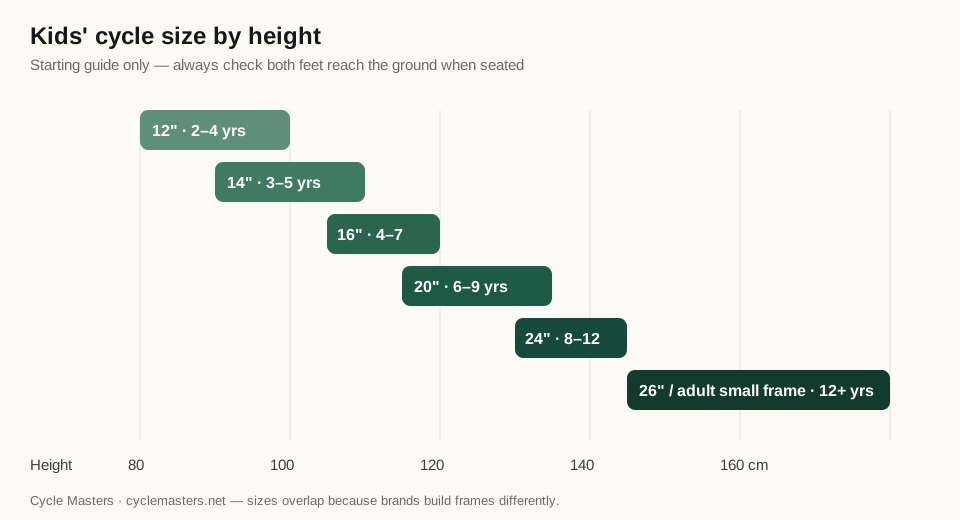 Kids' & baby cyclesBest Cycle for a 5-Year-Old: Size, Features and Learning TipsChoosing a cycle for a 5-year-old: why 14 or 16 inch is usually right, how to check the fit, training wheels vs balance, and what features matter.Read guide →