Cycle for Kids: How to Choose the Right Children's Cycle
Choose a kids' cycle by the child's height and inside-leg, not age: they should sit on the saddle with the balls of both feet on the ground. Pick the lightest cycle you can afford, with brakes your child can squeeze, air-filled tyres and removable training wheels — and always add a helmet.
- Fit by height, not age
- Feet should touch the ground when seated
- Lighter cycles are easier to learn on
- Helmet every ride
A child's first cycle is a big moment. Get it right and they'll be riding confidently within weeks. Get it wrong — usually by choosing a cycle that's too big or too heavy — and they may decide they don't like cycling at all. This guide covers what really matters when choosing a cycle for kids in Pakistan.
Step 1: Choose the right type for their stage
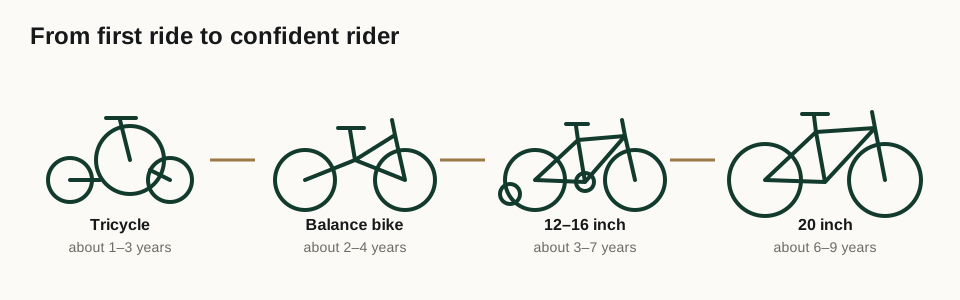
| Stage | Usual age | Best choice | Why |
|---|---|---|---|
| Playing and steering | 1–3 | Tricycle | Stable; can't tip easily; parent push handle on many models |
| Learning balance | 2–4 | Balance bike (no pedals) | Children learn balance first, then pedalling is easy |
| First pedal cycle | 3–6 | 12–16 inch cycle | Training wheels optional, coaster or hand brakes |
| Confident rider | 6–10 | 20 inch cycle | Hand brakes, sometimes a few gears |
| Older child | 9–12+ | 24 inch cycle | Close to an adult cycle, gears become useful |
For more on the youngest riders, see our baby cycle and tricycle guide.
Step 2: Get the size right
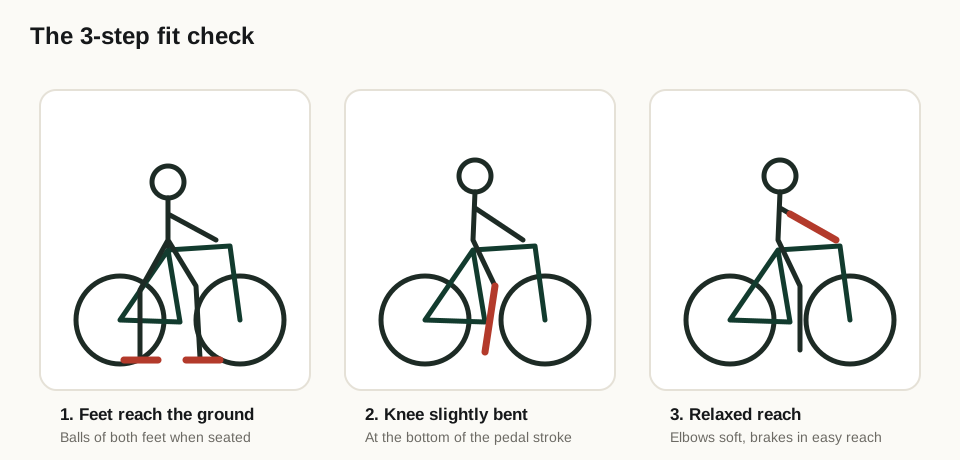
Wheel size ("inch" or "numbar" in many shops) is the starting point, but the real test is how the child sits on the cycle:
- Sitting on the saddle, they can put the balls of both feet on the ground. Beginners should be able to put their feet nearly flat.
- They can reach the handlebar comfortably without stretching or locking their arms.
- Standing over the frame, there's a little gap between them and the top tube.
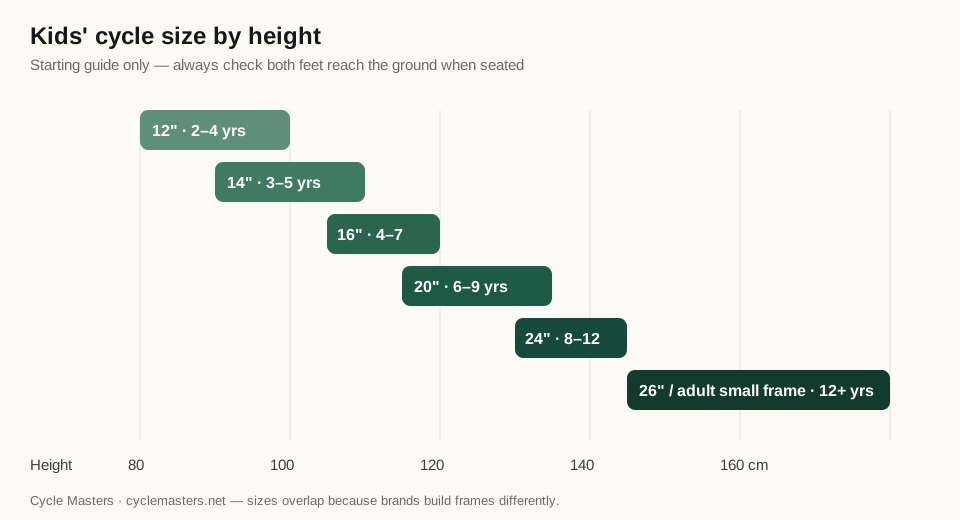
Use our cycle size chart to find the starting wheel size from your child's height, then check the fit in person.
Step 3: Check the weight
Lift the cycle. Many budget kids' cycles are made of heavy steel, and a heavy cycle is tiring to pedal and hard to control. Compare the cycle's weight to your child's — a lighter cycle makes a huge difference to how quickly they learn.
Step 4: Test the brakes
- Coaster brakes (pedal backwards to stop) are common on the smallest cycles and are easy for beginners.
- Hand brakes need levers small hands can reach and squeeze. Ask your child to try them in the shop. If they can't stop the wheel, the cycle isn't safe for them yet.
Step 5: Tyres and wheels
Air-filled tyres give better grip and a smoother ride on uneven pavements and park paths. Solid "foam" tyres never puncture but are bumpier and slippier. Spin each wheel — it should run straight without wobbling.
Training wheels or balance first?
Training wheels (stabilisers) let children pedal straight away, but they can teach them to lean the wrong way in turns. Balance bikes teach balance first; children who start on one often move to a pedal cycle with no training wheels at all. If you do use training wheels, raise them a little at a time and remove them when your child is steady.
Common mistakes parents make
- Buying too big. The most common mistake — it makes learning harder and riskier.
- Choosing by colour or character first. Let the child choose the colour *after* you've found the right size and a light frame.
- Ignoring the brakes. If small hands can't squeeze the levers, the cycle isn't safe yet.
- Leaving training wheels on too long. They help at first but slow down learning to balance.
- Skipping the helmet "just for the park". Most falls happen on short, familiar rides.
A shop checklist
| Check | Pass if… |
|---|---|
| Seat height | Balls of both feet reach the ground |
| Reach | Arms relaxed, can steer fully |
| Brakes | Child can stop the wheel by squeezing |
| Weight | You can lift it easily with one hand |
| Wheels | Spin straight, no wobble |
| Assembly | Handlebar and seat don't twist when pushed |
Safety essentials
- A helmet that fits, worn every ride — see our helmet guide.
- A bell, and reflectors or lights if they'll ride near dusk.
- Ride in parks, closed lanes or quiet streets with an adult nearby. Busy roads are not safe for young children.
- Teach the basics: stopping, looking behind, and walking the cycle across roads.
Looking after a kids' cycle
Check tyre pressure every couple of weeks, keep the chain lightly oiled, and look for loose bolts on the handlebar and seat. Cycles that live outside in the sun and rain wear out much faster, so keep it indoors or covered.
Frequently asked questions
What age can a child start cycling?
Many children start on a tricycle or balance bike at around two years old and move to a pedal cycle between three and five. Every child is different — readiness matters more than age.
Are training wheels a good idea?
Training wheels help some children feel confident, but they can slow down learning to balance. Many parents now start with a balance bike, or raise the training wheels gradually and remove them as soon as the child is steady.
What is the best cycle for a 3 year old?
For most three-year-olds a balance bike or a light 12-inch cycle is right. Check that your child can sit with both feet flat or nearly flat on the ground.
How often will I need to buy a bigger cycle?
Usually every two to three years, as the child grows through 12, 16, 20 and 24-inch wheels. Choosing a cycle with a long seat post gives a bit more growing room.
What size cycle for a 7 year old?
Many 7-year-olds fit a 16-inch or 20-inch cycle depending on height — roughly 16-inch below about 120 cm and 20-inch from about 115–135 cm. Always check the sit-on fit.
Tell us the rider's height, age and budget — we'll recommend a bike, whether or not we stock it.
Related guides
 Cycle prices in PakistanKids' Cycle Price in Pakistan (2026) by Age and SizeKids' and baby cycle prices in Pakistan for 2026, by age and wheel size — from tricycles to 20 and 24 inch cycles — plus what's worth paying extra for.Read guide →Sizes & fitCycle Size Chart: The Right Inch Size by Age and HeightCycle size chart for Pakistan: kids' wheel sizes (12 to 24 inch) by age and height, adult frame sizes by height, and a simple at-home fit test.Read guide →Kids' & baby cyclesBaby Cycle and Tricycle Guide: Choosing a First Ride for Ages 1–4Baby cycles explained: tricycles, push-handle trikes, balance bikes and 12-inch cycles for ages one to four, with safety checks and prices in Pakistan.Read guide →Kids' & baby cyclesBest Cycle for a 5-Year-Old: Size, Features and Learning TipsChoosing a cycle for a 5-year-old: why 14 or 16 inch is usually right, how to check the fit, training wheels vs balance, and what features matter.Read guide →