How to Teach a Child to Cycle (Without Training Wheels)
Here's how to teach a child to cycle: lower the saddle so both feet are flat, remove the training wheels and pedals, and let your child scoot and glide on a flat path until they can coast for a few seconds. Then refit the pedals, start with one pedal at the 2 o'clock position, steady them by the shoulders and let go once they are pedalling. Practise braking and steering in short, fun sessions.
- Start with pedals off
- Glide first, then pedal
- Hold shoulders, not handlebar
- 10–15 minute sessions
Teaching a child to ride is one of the best moments of childhood — for both of you. The method below avoids the classic "run behind holding the seat" approach and gets most children riding in days rather than weeks.
Before you start
- A cycle that fits. Both feet should touch the ground when seated. A cycle that is too big is the most common reason children struggle. Check our cycle for kids guide.
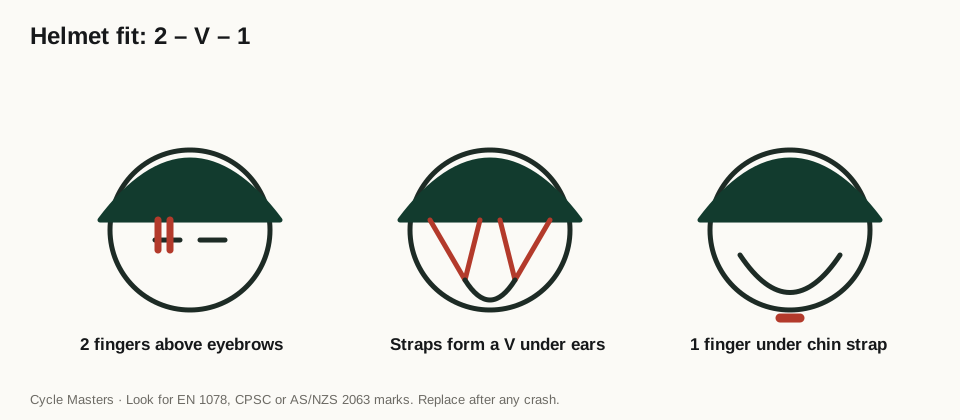
- A helmet that fits — see the kids' helmet guide.
- The right place: a flat, smooth path with grass beside it, away from traffic. A gentle grassy slope is perfect for gliding.
- Short sessions: 10–15 minutes is enough. Stop while it is still fun.
Step 1: Take off the training wheels and pedals
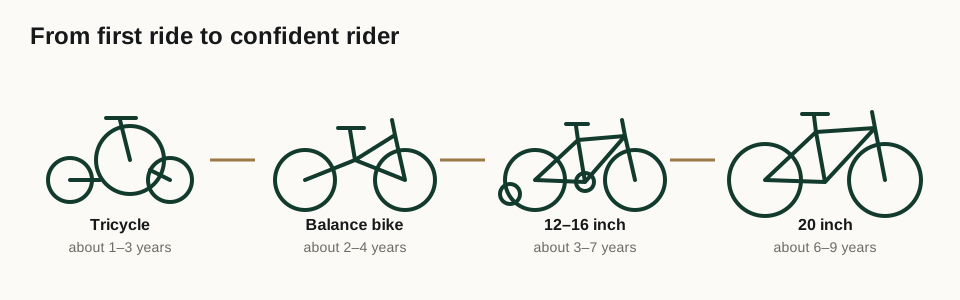
Remove the stabilisers. Then take off both pedals with a pedal spanner — the left pedal unscrews clockwise, the right pedal anti-clockwise. Lower the saddle so both feet sit flat on the ground. You now have a balance bike.
Step 2: Walk, scoot, glide
Let your child walk the cycle while sitting, then take bigger steps, then push off and lift both feet. Count out loud — "one, two, three!" — and make each longer glide a game. Remind them to look ahead, not at the front wheel.
Step 3: Add steering and braking
While gliding, ask them to steer around a slipper or cone and to stop using the brakes, not their feet. Squeezing both brake levers smoothly is a skill worth practising early.
Step 4: Put the pedals back on
Once your child can glide for four or five seconds with feet up, refit the pedals. Raise the saddle slightly so the knee is a little bent at the bottom of the stroke — but keep both feet able to reach the ground on tip-toe.
Step 5: The first pedal strokes
- Rotate one pedal to the 2 o'clock position (forward and up).
- Your child pushes down on that pedal to start, then finds the other pedal.
- Steady them lightly by the shoulders. Run alongside for a few metres, then let go.
- Practise starting, riding to a mark, and stopping — again and again.
Step 6: Build skills
- Ride a big figure of eight.
- Start without help, from both feet.
- Look over the shoulder briefly while riding straight.
- Stop at a line with both brakes.
Common problems and fixes
| Problem | Likely cause | Fix |
|---|---|---|
| Wobbles at every start | Not enough speed | Start from the 2 o'clock pedal and push hard |
| Keeps looking down | Nervous about the wheel | Pick a target ahead: "ride to the tree" |
| Can't stop | Brakes too stiff or levers too far | Adjust lever reach; practise squeezing |
| Afraid of falling | Saddle too high | Lower it so both feet reach the ground |
| Pedals backwards | Coaster brake confusion | Explain or practise on a hand-brake cycle |
Teaching an older child or adult
The same glide method works at any age. Use a cycle small enough that the learner can put both feet flat on the ground, remove the pedals or keep the saddle very low, and practise gliding first. See the balance section in our balance cycle guide.
Frequently asked questions
What age should a child learn to cycle?
Most children learn between about 3 and 7. Children who used a balance bike often pedal by 3 or 4; others are ready at 5 or 6. Readiness matters more than age.
How do I teach a child to cycle without stabilisers?
Take off the stabilisers and the pedals, lower the saddle, and let them glide first. Once they can balance while gliding, put the pedals back on. Most children ride within a few short sessions.
Should I hold the handlebar or the seat?
Neither, ideally. Hold your child lightly by the shoulders or the back of their top. Holding the handlebar stops them learning to steer; holding the seat makes them rely on you for balance.
How long does it take to learn?
With the glide method, many children ride in two to five sessions of 10–15 minutes. Some need longer — keep it fun and stop before they get tired.
My child is scared of falling. What helps?
Lower the saddle so both feet reach the ground, practise on grass, add knee pads, and celebrate small wins like a three-second glide. Fear usually fades once they feel in control.
Tell us the rider's height, age and budget — we'll recommend a bike, whether or not we stock it.
Related guides
Kids' & baby cyclesBalance Bike (Balance Cycle) Guide: The Easiest Way to Learn to RideWhat a balance bike is, which age and size to choose, how children learn balance on one, and how anyone — child or adult — can learn to balance a cycle.Read guide →Kids' & baby cyclesCycle for Kids: How to Choose the Right Children's CycleHow to choose a cycle for kids in Pakistan: the right size for each age, tricycle vs balance bike, training wheels, brakes, weight and safety tips.Read guide →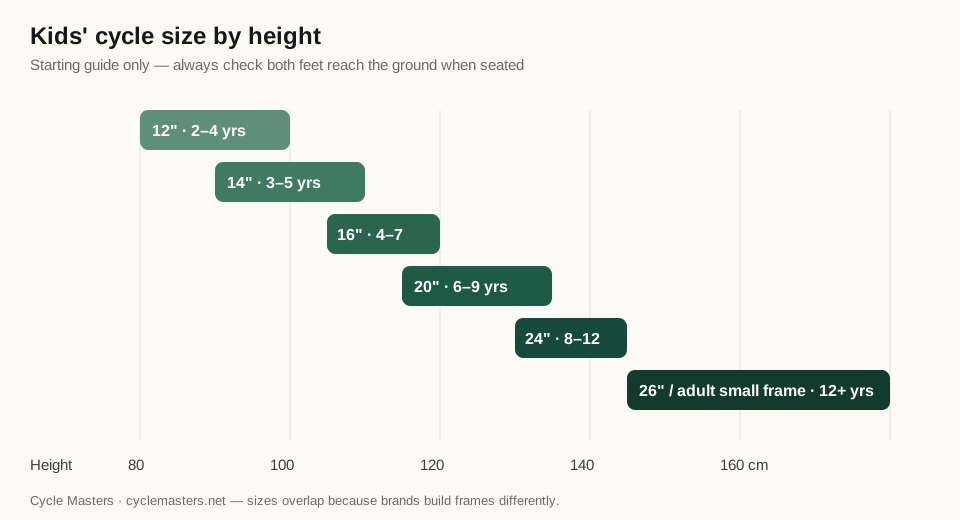 Kids' & baby cyclesBest Cycle for a 5-Year-Old: Size, Features and Learning TipsChoosing a cycle for a 5-year-old: why 14 or 16 inch is usually right, how to check the fit, training wheels vs balance, and what features matter.Read guide →
 Kids' & baby cyclesKids' Cycle Helmet: Sizes, Fitting and Safety StandardsHow to choose a kids' cycle helmet in Pakistan: measuring head size, a size chart by age, safety marks to look for, fitting steps and when to replace it.Read guide →