Cycle Safety for Kids: Helmets, Checks and Road Rules for Children
For cycle safety for kids: a correctly fitted helmet on every ride, a weekly check of brakes, tyres and handlebar, riding in parks and quiet lanes until about age 10, and teaching simple rules — stop and look at every junction, ride on the left, be seen. Add knee pads for beginners and lights for dusk.
- Helmet every ride
- Weekly 'ABC' check
- Parks first, roads later
- Stop and look at junctions
Cycling is one of the best things a child can do — and with a few habits, it's also very safe. These are the rules and checks we'd teach our own children.
1. A helmet that fits — every ride
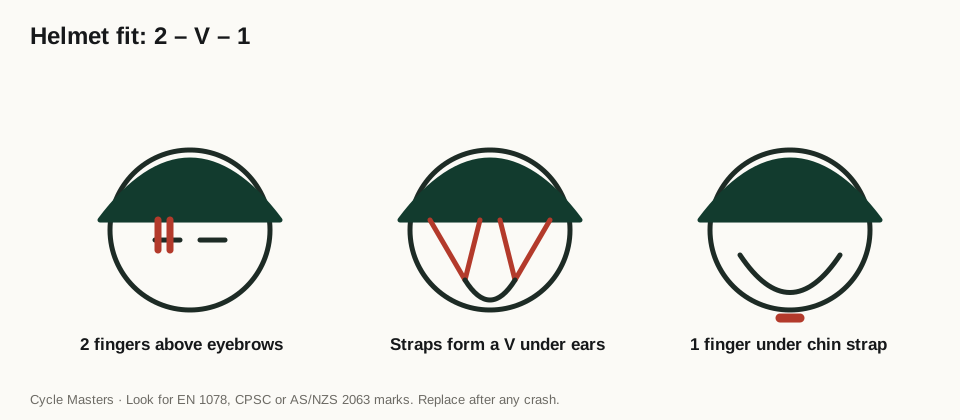
Choose by head size, look for a safety standard such as EN 1078 or CPSC, and fit it level with the chin strap snug. Full guide: kids' cycle helmet.
2. The weekly ABC check
| Letter | Check | How |
|---|---|---|
| A — Air | Tyres firm | Press with your thumb; pump to the pressure on the sidewall |
| B — Brakes | Both brakes stop the wheel | Squeeze levers; wheel shouldn't move when pushed |
| C — Chain | Chain clean and oiled, not loose | Turn pedals backwards; it should run smoothly |
| Quick — Bolts | Handlebar and wheels tight | Hold front wheel between knees, try to twist the handlebar |
More detail in the maintenance basics.
3. Where children should ride
| Age | Where |
|---|---|
| Under 6 | Parks, courtyards, closed lanes — always with an adult |
| 6–9 | Quiet streets with an adult alongside |
| 10+ | Short, familiar routes alone, after practising road skills together |
4. Rules to teach
- Stop and look right, left and right again at every junction and driveway.
- Ride on the left, in the same direction as traffic.
- One rider per cycle unless it's built for two.
- Hands on the handlebar, eyes ahead — no phones or headphones.
- Signal clearly before turning (older children).
- Walk the cycle across busy roads.
5. Be seen
Bright clothes in the day; front and rear lights and reflectors at dawn and dusk. Winter fog and early school runs are when visibility matters most.
6. Safety parts on a kids' cycle
- Chain guard — the "safety guard" that keeps clothes and fingers out of the chain.
- Handlebar pad and grip ends to protect against knocks.
- Bell — teach your child to use it near walkers.
- Reflectors on wheels and pedals.
7. Heat and hydration
Pakistani summers are hard on small riders. Ride early or late, carry water, and take shade breaks.
Getting started safely
If your child is just learning, see how to teach a child to cycle. Choosing a cycle that fits is itself a safety step — see cycle for kids.
Teaching road skills step by step
- Control first: riding in a straight line, braking to a stop at a mark, steering around cones.
- Look back: riding straight while glancing over the shoulder — practise in a park.
- Signals: holding one hand out briefly while staying in control.
- Junctions: stopping, looking right-left-right, and walking across busy roads.
- Quiet streets together: an adult rides behind and slightly outside the child.
What to carry on family rides
Water, a small first-aid kit, a mini pump and spare tube, and a phone. For longer rides, plan shade stops and choose routes away from fast traffic.
Frequently asked questions
What are the most important cycle safety rules for kids?
Wear a helmet, check the brakes before riding, stop and look both ways at every junction and driveway, ride on the left in the same direction as traffic, and be visible with bright clothes and lights.
At what age can a child ride on the road?
Most children can't judge traffic speed reliably until about 10 or older. Before then, ride with them in parks, closed lanes and quiet streets, and build road skills together.
What is a safety guard on a kids' cycle?
Usually the chain guard, which covers the chain so clothes and fingers can't get caught. Spoke guards and pads on the handlebar crossbar are also common on kids' cycles.
Do kids need knee and elbow pads?
They're not essential, but they help nervous beginners and children learning tricks or riding BMX. A helmet is the essential item.
Tell us the rider's height, age and budget — we'll recommend a bike, whether or not we stock it.
Related guides
Kids' & baby cyclesKids' Cycle Helmet: Sizes, Fitting and Safety StandardsHow to choose a kids' cycle helmet in Pakistan: measuring head size, a size chart by age, safety marks to look for, fitting steps and when to replace it.Read guide →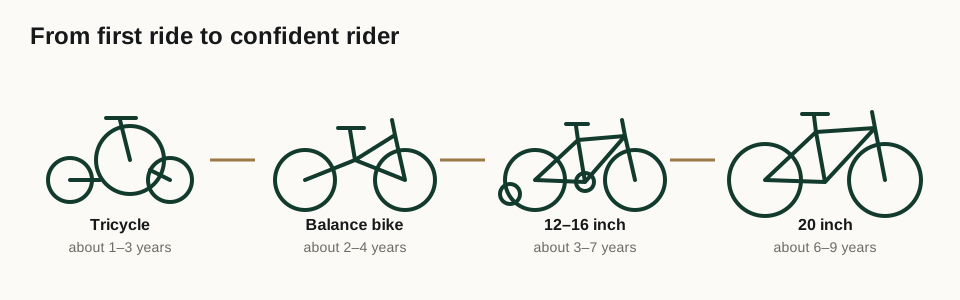 Kids' & baby cyclesHow to Teach a Child to Cycle (Without Training Wheels)A calm, step-by-step way to teach a child to cycle without stabilisers: set-up, gliding, first pedal strokes, steering and braking, plus common problems.Read guide →Kids' & baby cyclesCycle for Kids: How to Choose the Right Children's CycleHow to choose a cycle for kids in Pakistan: the right size for each age, tricycle vs balance bike, training wheels, brakes, weight and safety tips.Read guide →
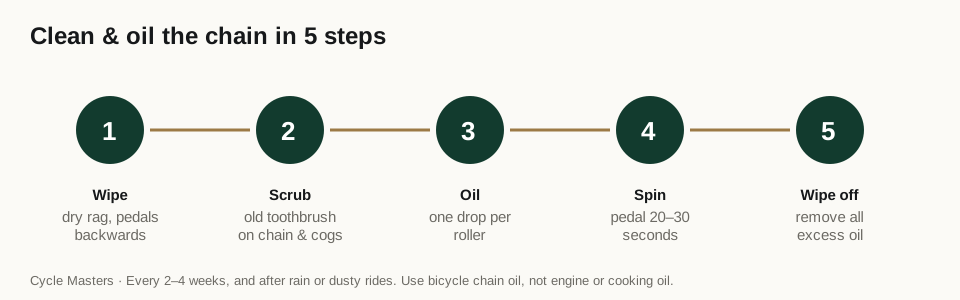 Maintenance & repairCycle Maintenance Basics: 7 Simple Jobs That Keep Your Bike RunningSimple cycle maintenance for Pakistani riders: tyre pressure, cleaning and oiling the chain, brake and gear checks, bolt checks, and when to see a mechanic.Read guide →