Cycle Rickshaw: How It Works, Types and Uses in Pakistan
A cycle rickshaw is a pedal-powered three-wheeler used to carry passengers or goods. Passenger rickshaws have a seat behind the rider; loading (cargo) rickshaws have a flat bed or box for goods, popular with vendors and small businesses. Many are now fitted with electric assist to make heavy loads easier. Choose a strong frame, good brakes and a gear range that suits your load and roads.
- Pedal-powered three-wheeler
- Passenger or loading (cargo)
- Electric assist is common
- Brakes and frame strength matter
The cycle rickshaw is one of the most practical vehicles ever made: no fuel, cheap to run, and able to carry far more than a normal cycle. In Pakistan, cargo versions remain common for vendors and deliveries.
Types of cycle rickshaws
| Type | Use |
|---|---|
| Passenger rickshaw | One or two passengers on a bench seat behind the rider |
| Loading / cargo rickshaw | Flat bed or box for goods — vendors, deliveries |
| Vendor cart tricycle | Built-in counter or box for selling food or goods |
| Advertising tricycle | Billboard panels for mobile advertising |
| Electric-assist rickshaw | Any of the above with a motor and battery |
How it's built
Most have one wheel in front (steering) and two at the back carrying the load, or the reverse on some cargo models. The rear axle is driven by a chain from the pedals; heavier models use gears or a two-speed hub.
Choosing a cycle rickshaw
- Load capacity — match it to your heaviest typical load.
- Frame strength — thick steel tubes and solid welds.
- Brakes — heavy loads need strong brakes; drum or disc brakes are best. See disc brakes.
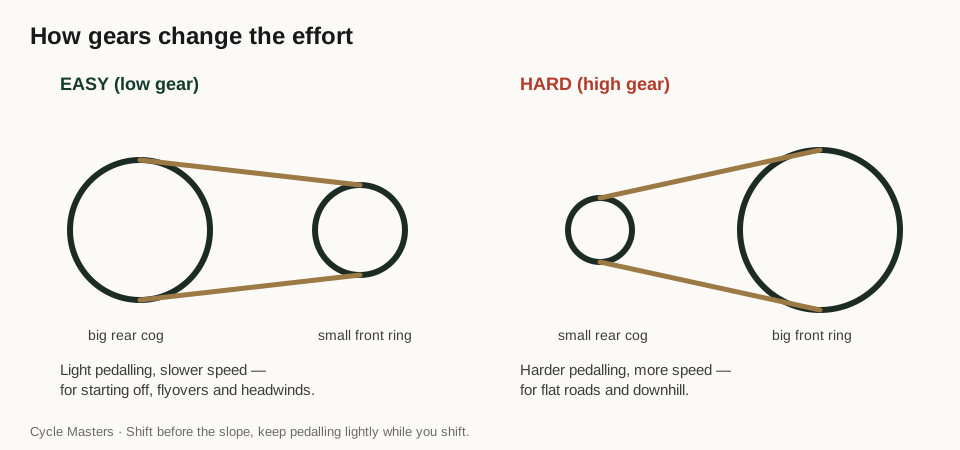
- Gears — useful on slopes; see the gear cycle guide.
- Tyres — thick tyres and tubes rated for the load.
- Spare parts — choose models that local shops can service.
Electric conversions
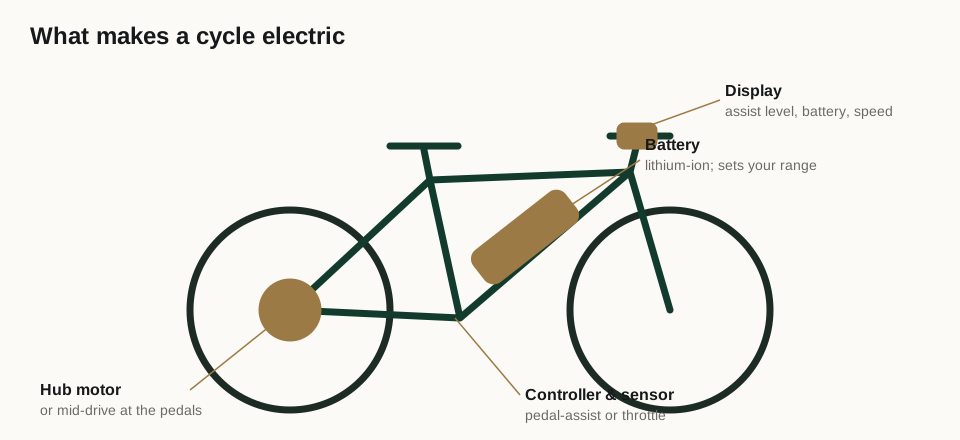
Adding pedal assist makes heavy loads far easier, especially in heat. Check battery capacity for your daily distance, keep electronics dry, and make sure brakes can handle the extra speed. More in the electric cycle guide.
Running costs and care
- Grease wheel bearings and the chain regularly.
- Check tyre pressure daily if fully loaded.
- Inspect welds and the rear axle for cracks.
Need a mechanic? See how to find a good cycle shop.
Cargo tricycles for small businesses
For vendors, a cargo tricycle can replace a hand cart or reduce dependence on a motorbike for short local deliveries. Running costs are very low: tyres, tubes, chain, brake parts and grease. The key is matching the cycle to your load and route — a heavy box of fruit on a flat market street needs a different setup from deliveries up slopes.
Safety with heavy loads
Load the heaviest items low and centred over the rear axle, secure everything with straps, and allow extra distance to stop. Three-wheelers handle differently from bicycles: they don't lean into corners, so slow down before turning to avoid tipping.
Frequently asked questions
What is a cycle rickshaw?
A pedal-powered tricycle built to carry passengers or cargo, with the rider in front and a seat or load bed behind.
What is a loading cycle rickshaw?
A cargo tricycle with a flat bed or box, used by vendors, delivery and small businesses to carry goods.
Can a cycle rickshaw be made electric?
Yes. Electric conversion kits add a motor and battery for pedal assist; check the frame, brakes and local rules before converting.
Are cycle rickshaws used for advertising?
Yes — billboard-style panels on cargo tricycles are used for mobile advertising at events and in markets.
Tell us the rider's height, age and budget — we'll recommend a bike, whether or not we stock it.
Related guides
 Types of cyclesElectric Cycle (E-Bike) Guide for Pakistan: Prices, Range and Buying TipsElectric cycles in Pakistan explained: pedal-assist vs throttle, batteries and range, charging, prices from about Rs 85,000, and what to ask before buying.Read guide →
 Types of cyclesGear Cycle vs Non-Gear Cycle: Which Should You Buy?Gear cycle or non-gear cycle? How bicycle gears work, how many you need, how to shift properly, and which type suits Pakistani roads and riders.Read guide →
 Buying guidesChoosing a Cycle Shop Near You: What a Good Bicycle Shop OffersHow to find a good cycle shop near you in Pakistan for buying, repairs and spare parts: what to look for, questions to ask, fair repair jobs, and online shops.Read guide →
 Parts & accessoriesDisc Brake Cycle Guide: Mechanical vs Hydraulic, Repair and MaintenanceWhat a disc brake on a cycle is, mechanical vs hydraulic disc brakes, disc vs V-brakes, fixing rubbing and squealing discs, and replacing pads.Read guide →