Gear Cycle vs Non-Gear Cycle: Which Should You Buy?
A gear cycle lets you choose an easier or harder pedalling effort, which helps on hills, flyovers, headwinds and longer rides. A non-gear (single-speed) cycle is lighter, cheaper and needs less maintenance — ideal for short, flat city rides and young children. Choose gears if you ride further than a few kilometres or face slopes.
- Gears help on hills, flyovers & long rides
- Single-speed: lighter, cheaper, simpler
- Under ~8 years: gears rarely needed
- Cheap gear systems slip — test before buying
"Gear wali cycle" or a simple one? It's one of the first decisions when buying a cycle in Pakistan. Gears can make riding much easier — but only if you need them, and only if they work properly.
How cycle gears work
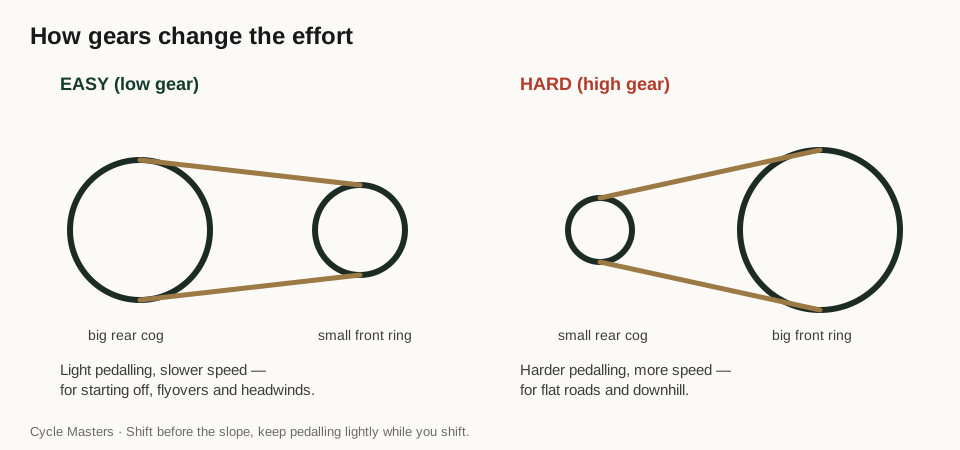
Gears change how far the cycle travels for each turn of the pedals.
- Low (easy) gears — small cog at the front, big cog at the back. Pedalling is light; the cycle moves slowly. Use them for climbing flyovers, starting off, or riding into wind.
- High (hard) gears — big cog at the front, small cog at the back. Each pedal turn moves you further; good for flat roads and downhill.
The shifters on the handlebar move the chain between cogs using a part called the derailleur. The left shifter usually controls the front, the right controls the back.
Gear vs non-gear at a glance
| Gear cycle | Non-gear (single-speed) | |
|---|---|---|
| Hills and flyovers | Much easier | Harder work |
| Weight | Heavier | Lighter |
| Price | Higher | Lower |
| Maintenance | Needs regular adjustment | Very little |
| Best for | Longer rides, slopes, fitness | Short flat trips, kids, beginners |
How many gears do you need?
You'll see cycles sold as 6-, 7-, 18-, 21- or 24-speed. "21-speed" means 3 front rings × 7 rear cogs — but many of those combinations overlap. For most riders in Pakistani cities:
- Mostly flat, short rides: single-speed is fine.
- Daily commuting with some flyovers: 7–8 gears at the back is plenty.
- Hills (Islamabad, Murree, northern areas) or long rides: a wider range, such as 2 or 3 rings at the front, helps.
How to shift gears properly
- Shift before you need to — before a slope, not halfway up it.
- Keep pedalling lightly while shifting. Never shift while standing still or pushing hard.
- Avoid extreme "cross-chaining" — the biggest front ring with the biggest rear cog, or smallest with smallest. It wears the chain and makes noise.
- Use the rear gears for small changes, the front for big changes in terrain.
Gear numbers decoded
| Label | What it means | Good for |
|---|---|---|
| Single-speed | One gear, no shifters | Flat, short trips; kids |
| 3–8 speed (one front ring) | Only rear gears change | City riding with some slopes |
| 18 / 21 / 24 speed | 3 front rings × 6, 7 or 8 rear cogs | Wide range for hills; many overlaps |
| 1× (one-by) | One front ring, wide rear range | Simple, modern mountain/gravel bikes |
| Internal hub gears | Gears inside the rear hub | Low maintenance city bikes |
Matching gears to your riding
| Your typical ride | Recommendation |
|---|---|
| Under 3 km, flat, few stops | Single-speed |
| 3–10 km with flyovers and underpasses | 6–8 speed |
| Long rides, wind, hills (Islamabad, Murree) | Wider range, 2–3 front rings or 1× with big cassette |
| Children under 8 | Single-speed |
Signs of a good gear system on a test ride
- Each click moves the chain one cog, quickly and quietly.
- The chain doesn't rub the front derailleur in the middle gears.
- Shifting under light pedalling works without clunks.
- The shifters feel positive, not vague or sticky.
Gear cycles for kids
Children under about eight usually find gears confusing, and the extra parts add weight. From about eight or nine, on a 24-inch cycle, a simple setup with one shifter is easy to learn. See our cycle for kids guide.
Quality matters more than the number of gears
Many budget "21-gear" cycles use low-quality shifters that slip and quickly go out of tune. A well-made 7-speed cycle is more pleasant than a poorly made 21-speed. Before buying:
- Shift through every gear on a test ride. Each change should be quick and quiet.
- Check that the chain doesn't jump or rub.
- Ask the shop to adjust the gears again after the first few weeks, as new cables stretch.
Gear cycle prices in Pakistan
Gear cycles cost more than equivalent single-speeds because of the extra parts. In our price guide most 24–26 inch gear and sports cycles fall in the Rs 30,000–60,000 range, with branded imported bikes above that.
Keeping gears working
Clean and lightly oil the chain regularly, especially after rain or dusty rides. If shifting becomes slow or noisy, the cable may need tightening — a quick job for a mechanic. See cycle maintenance basics.
Frequently asked questions
Is a gear cycle better than a non-gear cycle?
Not always. Gears help on slopes and longer rides. For short, flat trips, a single-speed is lighter, cheaper and has fewer parts to wear out.
How many gears do I need?
For city riding, 7–8 gears at the back is plenty. 21 or 24 gears (3 at the front × 7 or 8 at the back) give extra range for hills but include many overlapping combinations.
Why do the gears on my cycle slip?
Usually because the gear cable has stretched, the derailleur needs adjusting, or the chain and cogs are worn or dirty. A mechanic can 'index' the gears in a few minutes.
Can kids ride gear cycles?
Children from about eight or nine, on 24-inch cycles, can learn to use a few gears. Younger children are usually better on a light single-speed.
Tell us the rider's height, age and budget — we'll recommend a bike, whether or not we stock it.
Related guides
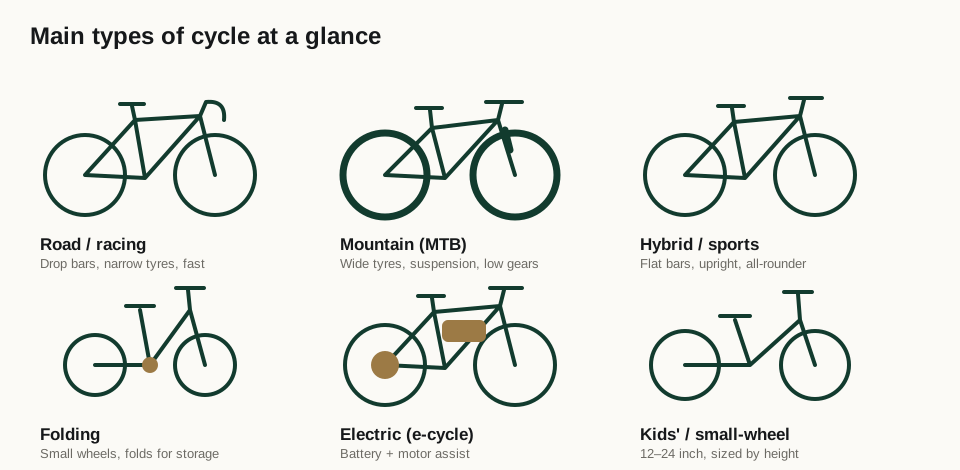 Types of cyclesSports Cycle and Racing Cycle Guide: What They Are and Who They SuitWhat 'sports cycle' and 'racing cycle' mean in Pakistan, the difference between road, hybrid and mountain-style sports cycles, and how to choose one.Read guide →Types of cyclesMountain Bike Guide: Do You Need One, and How to ChooseMountain cycles explained for Pakistani riders: hardtail vs full suspension, wheel sizes, frame sizes, real off-road features and when a hybrid is better.Read guide →
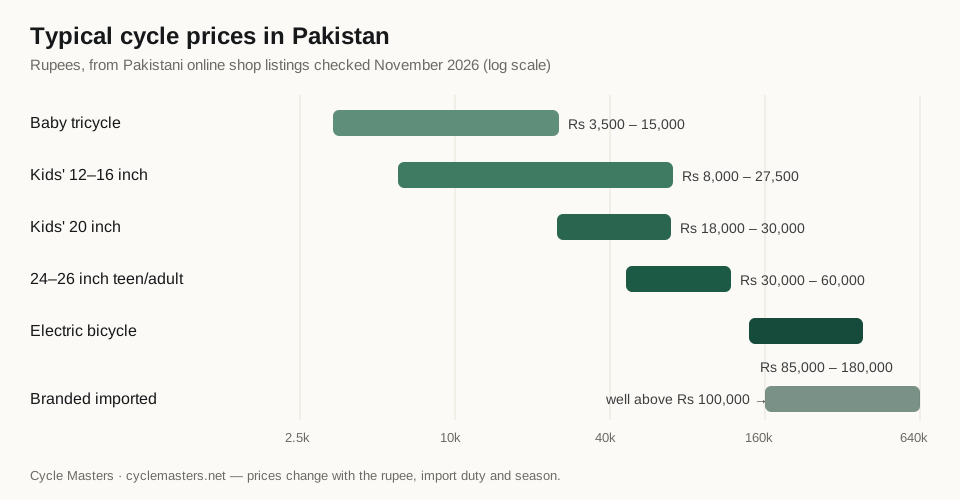 Cycle prices in PakistanCycle Price in Pakistan (2026): What You Should Really PayWhat a cycle costs in Pakistan in 2026: price ranges for kids', gear, sports, mountain, folding and electric cycles, and what you get at each budget.Read guide →
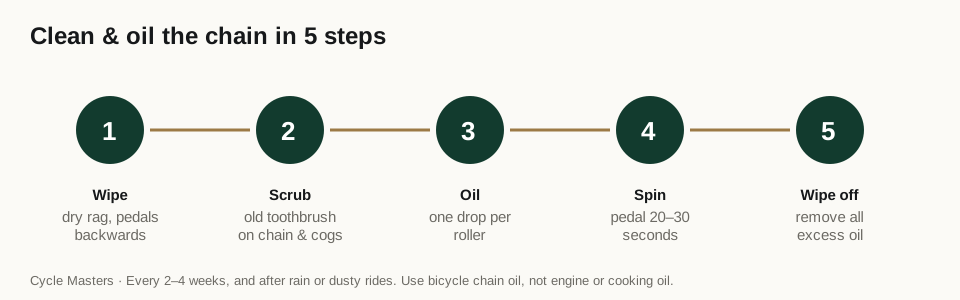 Maintenance & repairCycle Maintenance Basics: 7 Simple Jobs That Keep Your Bike RunningSimple cycle maintenance for Pakistani riders: tyre pressure, cleaning and oiling the chain, brake and gear checks, bolt checks, and when to see a mechanic.Read guide →