Disc Brake Cycle Guide: Mechanical vs Hydraulic, Repair and Maintenance
A disc brake stops a cycle by squeezing pads onto a metal rotor fixed to the wheel hub. Mechanical disc brakes use a cable and are easy to maintain; hydraulic ones use fluid and give stronger, lighter braking. Disc brakes work better than V-brakes in rain and dust and don't wear the rim. Most rubbing or squealing is fixed by re-centring the caliper and keeping oil off the pads and rotor.
- Pads grip a hub rotor
- Mechanical: cable, simple
- Hydraulic: stronger, lighter feel
- Better in rain than V-brakes
Disc brakes used to be found only on expensive mountain bikes. Today many budget cycles in Pakistan advertise "dual disc". Here's how they work and how to keep them working.
How disc brakes work
A rotor (steel disc) bolts to the wheel hub. A caliper with two pads sits over the rotor. Pull the lever and the pads clamp the rotor, slowing the wheel.
Mechanical vs hydraulic
| Mechanical | Hydraulic | |
|---|---|---|
| How | Steel cable pulls the caliper | Fluid pushes pistons |
| Power | Good | Stronger, needs less finger force |
| Maintenance | Easy, cable adjustment | Occasional bleeding with fluid |
| Price | Lower | Higher |
Mechanical discs are a great choice for most riders; hydraulic suits mountain biking and heavier riders.
Disc brakes vs V-brakes
| Disc | V-brake | |
|---|---|---|
| Wet weather | Excellent | Weaker |
| Rim wear | None | Wears the rim |
| Weight | Heavier | Lighter |
| Fixing on the road | Harder | Easy |
Fixing common problems
Rubbing rotor
- Loosen the two caliper mounting bolts slightly.
- Squeeze and hold the brake lever.
- Retighten the bolts evenly, then release.
Squealing
- Clean the rotor with isopropyl alcohol and a clean cloth.
- Replace pads if oil or chain lube got on them.
- New pads need "bedding in": 10–20 firm stops from moderate speed.
Spongy lever (hydraulic)
- Air in the system — needs a bleed (a cycle shop can do this).
Lever pulls to the bar (mechanical)
- Pads worn or cable stretched — turn the barrel adjuster or replace pads.
When to replace pads
Replace when the pad material is under about 1 mm thick, or if pads are contaminated. Rotors have a minimum thickness stamped on them.
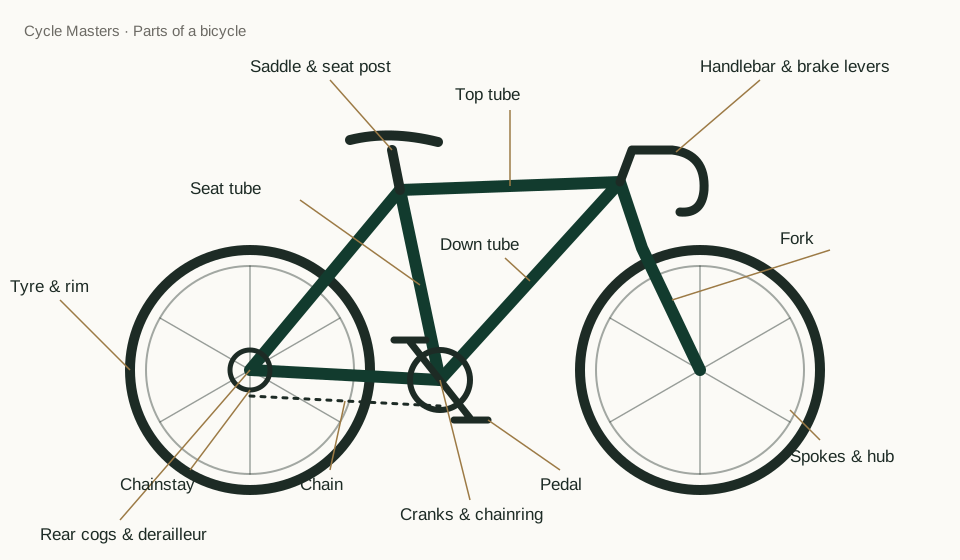
More brake basics in maintenance basics and cycle parts names.
Bedding in new pads and rotors
New pads and rotors need a short "bedding in" to reach full power: on a safe, quiet road, ride at moderate speed and brake firmly (without locking the wheel) down to walking pace, about 10–20 times. This lays an even layer of pad material onto the rotor and reduces noise.
Riding with disc brakes in Pakistani conditions
Dust and mud are hard on any brake. After dusty or wet rides, rinse the caliper area gently with water, avoid spraying degreaser near the rotor, and check pad thickness every few weeks. In summer heat on long descents, brake in short, firm bursts rather than dragging the brakes continuously to stop them overheating.
Frequently asked questions
What is a disc brake in a cycle?
A brake with a metal disc (rotor) on the wheel hub and a caliper with pads on the frame or fork. Squeezing the lever clamps the pads onto the rotor.
Are disc brakes better than V-brakes?
For stopping in rain, dust and on long descents, yes. V-brakes are lighter, cheaper and easy to fix, and work well when adjusted — fine for city riding.
How do I stop a disc brake rubbing?
Loosen the two caliper bolts, squeeze and hold the brake lever, retighten the bolts, then release. Spin the wheel; if it still rubs, check the rotor isn't bent.
Why is my disc brake squealing?
Usually contamination — oil or grease on the pads or rotor — or glazed pads. Clean the rotor with isopropyl alcohol and replace contaminated pads.
Do 'dual disc' cheap cycles have good brakes?
Many budget dual-disc cycles use basic mechanical calipers that need careful adjustment. They can work well once set up; check they stop firmly on a test ride.
Tell us the rider's height, age and budget — we'll recommend a bike, whether or not we stock it.
Related guides
Parts & accessoriesCycle Parts Names: Every Part of a Bicycle ExplainedCycle parts names explained in simple English: frame, fork, wheels, chain, derailleur, brakes, cranks and more — what each part does and when to replace it.Read guide → Maintenance & repairCycle Maintenance Basics: 7 Simple Jobs That Keep Your Bike RunningSimple cycle maintenance for Pakistani riders: tyre pressure, cleaning and oiling the chain, brake and gear checks, bolt checks, and when to see a mechanic.Read guide →Parts & accessoriesCycle Wheel and Rim Guide: Sizes, Parts, Truing and ReplacementCycle wheel and rim guide: wheel sizes, rim, spokes, hub and tyre explained, single vs double-wall rims, how to spot a bent wheel, and replacing a cycle.Read guide →
 Types of cyclesMountain Bike Guide: Do You Need One, and How to ChooseMountain cycles explained for Pakistani riders: hardtail vs full suspension, wheel sizes, frame sizes, real off-road features and when a hybrid is better.Read guide →