Cycle Helmet Guide: Choosing, Fitting and Replacing a Bicycle Helmet
Choose a cycle helmet that carries a recognised safety mark such as EN 1078, CPSC or AS/NZS 2063, fits snugly without rocking, and has good ventilation for Pakistani heat. Wear it level, two fingers above the eyebrows, with the side straps forming a V under each ear and the chin strap snug. Replace it after any crash.
- Look for EN 1078, CPSC or AS/NZS marks
- Fit: 2 fingers above eyebrows
- Straps: V under ears, snug chin strap
- Replace after any impact
A helmet is the single best accessory you can buy with a cycle — and one of the cheapest. This guide covers how to choose a good one, how to fit it properly (the part most people get wrong), and when to replace it.
What to look for
A recognised safety mark
Look inside the helmet for a sticker showing it has been tested to a bicycle helmet standard, for example:
- EN 1078 (Europe)
- CPSC (United States)
- AS/NZS 2063 (Australia and New Zealand)
A helmet with no safety mark at all is a gamble.
Ventilation
In Pakistani summers, a hot helmet is a helmet that doesn't get worn. Choose one with plenty of vents and a light weight.
Adjustable fit
A dial or ratchet at the back lets you fine-tune the fit — very useful for growing children.
Visibility
Bright colours and reflective details help drivers see you, especially at dawn and dusk.
How to fit a cycle helmet
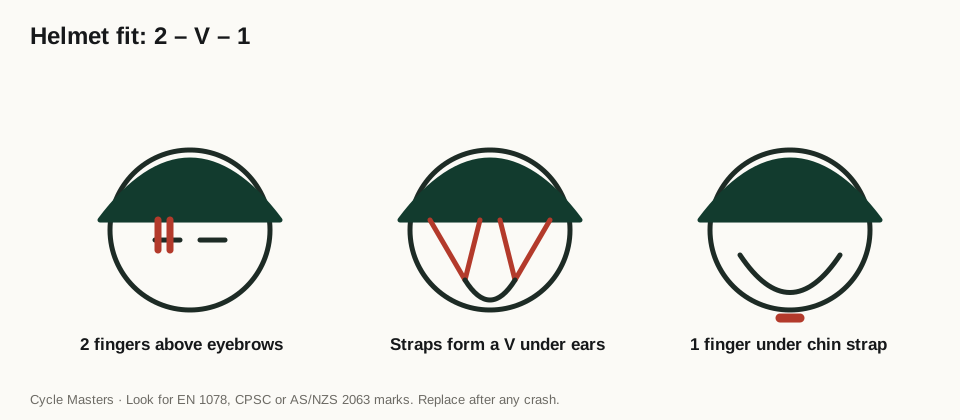
- Size: measure around the head just above the eyebrows and choose that size range.
- Level: wear it level, about two fingers' width above the eyebrows — not tilted back.
- Side straps: adjust so they form a V just under each earlobe.
- Chin strap: buckle it so only one finger fits between strap and chin.
- Shake test: shake your head — the helmet should move with your head, not slide around.
- Yawn test: when you open your mouth wide, the helmet should press down slightly.
Kids' helmets
Children's helmets often have extra coverage at the back of the head. Let your child choose the colour or design — they're more likely to wear it. Make the helmet part of the routine from the very first ride. See our guide to choosing a cycle for kids.
Types of cycle helmet
| Type | Features | Best for |
|---|---|---|
| Road | Light, many vents | Fitness and fast rides |
| Mountain bike | Extra coverage at the back, visor | Trails and rough riding |
| Commuter / urban | Fewer vents, often lights or reflective parts | City riding |
| Kids' | Extra rear coverage, fun designs, adjustable | Children |
Typical sizes
Many brands size helmets by head circumference — commonly around 51–55 cm (small), 55–59 cm (medium) and 59–63 cm (large). Ranges vary, so measure and check the brand's own chart.
When to replace a helmet
- After any crash or hard impact, even if there's no visible damage — the protective foam may be crushed.
- If the shell is cracked, the foam is damaged or the straps are worn.
- When a child has outgrown it.
Helmet care
Keep it out of hot cars and direct sun when you're not using it, as heat can damage the materials. Clean it with mild soap and water — not solvents.
Frequently asked questions
Do I really need a helmet for short rides?
Many falls happen on short, familiar trips. A helmet is cheap protection for your head on every ride, especially for children who are still learning.
How do I know my child's helmet fits?
It should sit level two fingers above the eyebrows, not move much when they shake their head, and the chin strap should allow about one finger between strap and chin.
When should a cycle helmet be replaced?
After any crash or hard knock, even if it looks fine, and when the foam or straps are damaged. Many makers also suggest replacing helmets after several years of use.
Can I use a motorcycle helmet for cycling?
They're designed for different impacts and are heavy and hot for cycling. Use a helmet designed and certified for bicycles.
Tell us the rider's height, age and budget — we'll recommend a bike, whether or not we stock it.
Related guides
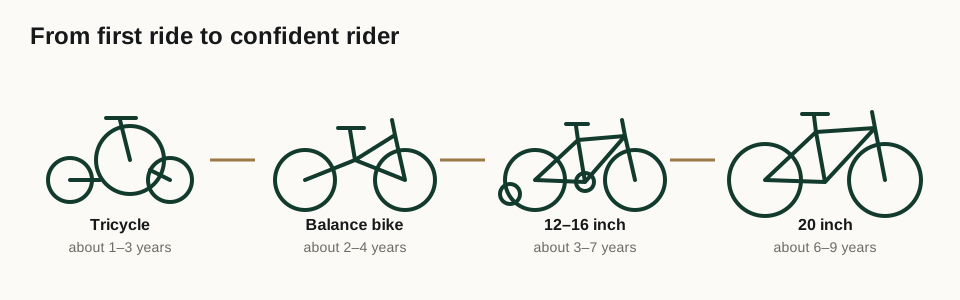 Kids' & baby cyclesCycle for Kids: How to Choose the Right Children's CycleHow to choose a cycle for kids in Pakistan: the right size for each age, tricycle vs balance bike, training wheels, brakes, weight and safety tips.Read guide →
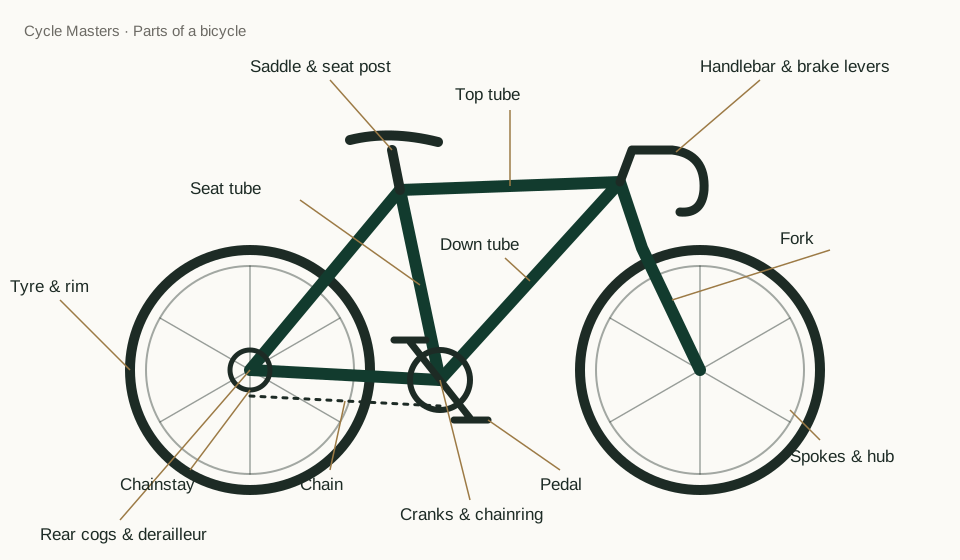 Parts & accessoriesCycle Parts Names: Every Part of a Bicycle ExplainedCycle parts names explained in simple English: frame, fork, wheels, chain, derailleur, brakes, cranks and more — what each part does and when to replace it.Read guide →
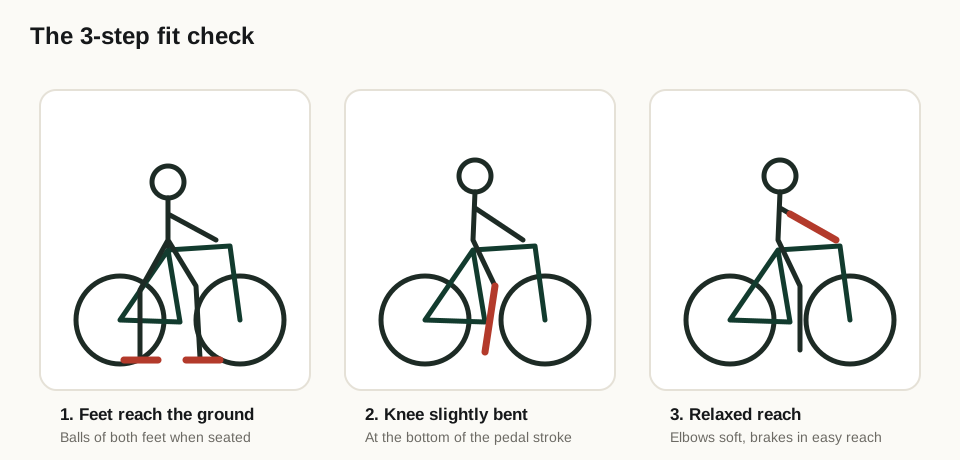 Riding in PakistanCycling for Women in Pakistan: Choosing a Cycle and Riding with ConfidenceA practical guide to cycling for women in Pakistan: choosing a ladies' cycle, comfortable clothing, riding with confidence, safety and finding places to ride.Read guide →
 Riding in PakistanBenefits of Cycling: What Riding Regularly Does for Your HealthThe benefits of cycling for health, fitness, mood and everyday life, how much riding counts as enough, and how to start safely in Pakistan's heat and traffic.Read guide →