Cycling for Women in Pakistan: Choosing a Cycle and Riding with Confidence
Any well-fitting cycle works for women; many prefer a step-through frame that's easy to mount in a shalwar kameez, an upright riding position and a chain guard. Start in parks or quiet lanes, ride at less busy times, consider riding with a friend or group, and wear a helmet and bright, comfortable clothing.
- Step-through frames are easiest to mount
- Chain guard protects loose clothing
- Start in parks & quiet lanes
- Riding with others builds confidence
More women in Pakistan are taking up cycling — for fitness, for short trips, or simply for the joy of it. This guide covers choosing a cycle, what to wear, and building confidence on the road.
Choosing a cycle
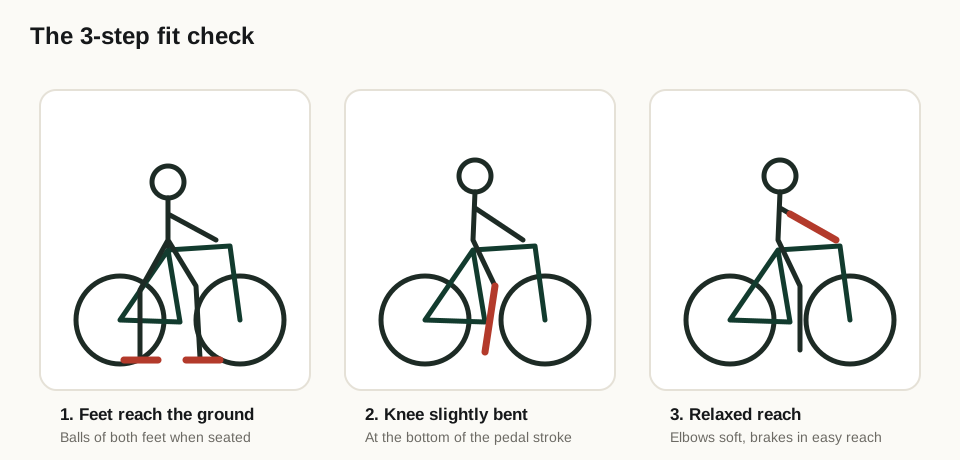
There's no such thing as a cycle only women can ride — but some designs are especially practical.
Step-through frames
A low or dipped top tube lets you step through rather than swing a leg over. It's easier in a shalwar kameez, abaya or skirt, and lets you put a foot down quickly.
Upright position
City and hybrid cycles keep you sitting fairly upright, which is comfortable, gives a good view of traffic and helps drivers see you.
Chain guard and mudguards
They keep clothing clean and away from the chain.
Fit
Choose by height using our size chart. Many women find a smaller frame easier to control. A women's-specific saddle can make longer rides more comfortable.
What to wear
- Comfortable, breathable clothing you can move in.
- Secure loose fabric — tuck in or tie the dupatta so it can't catch in the wheels or chain.
- Closed shoes with grippy soles.
- A helmet — see our helmet guide.
- Bright or reflective layers for visibility.
Building confidence
- Start in a park, ground or quiet lane to practise starting, stopping and turning.
- Ride at quieter times, such as early mornings or weekends.
- Ride with a friend or join a group. Many Pakistani cities have cycling groups, and riding together builds confidence.
- Plan your route on quieter roads and service lanes.
- Learn basic maintenance — pumping tyres and fixing a loose chain — so small problems don't end a ride. See maintenance basics.
Safety on the road
- Ride predictably in a straight line, and make your intentions clear with hand signals.
- Make eye contact with drivers at junctions.
- Keep a little distance from parked cars so a door can't hit you.
- Carry a phone and let someone know your route on longer rides.
Common worries — and practical answers
"I haven't ridden since I was a child." Balance comes back quickly. Lower the saddle, practise on a flat open space for twenty minutes, and you'll usually be riding by the end of the session.
"I'll arrive sweaty." Ride gently, choose early morning, and keep a spare top at work if needed. An electric cycle removes most of the effort on longer trips.
"I'm worried about traffic." Start with quiet routes and parks, ride at less busy times and build up gradually. Riding with a friend or group helps a lot.
"What if something breaks?" Carry a phone, a small pump and know the nearest repair shop. Learning to pump a tyre and put a chain back on covers most small problems.
For girls
For younger riders, see our guide to cycles for girls, with sizes by age.
Frequently asked questions
What is the best cycle for ladies?
A cycle that fits your height, with a comfortable saddle and an upright position. Step-through city and hybrid cycles are popular because they're easy to get on and off.
Can I cycle in a shalwar kameez?
Yes. A step-through frame and a chain guard help, and tucking in or securing a dupatta keeps it clear of the wheels and chain.
What size cycle should a woman buy?
Choose by height. Many women between about 152 and 165 cm fit a small adult frame; check the brand's size chart and test the fit.
Tell us the rider's height, age and budget — we'll recommend a bike, whether or not we stock it.
Related guides
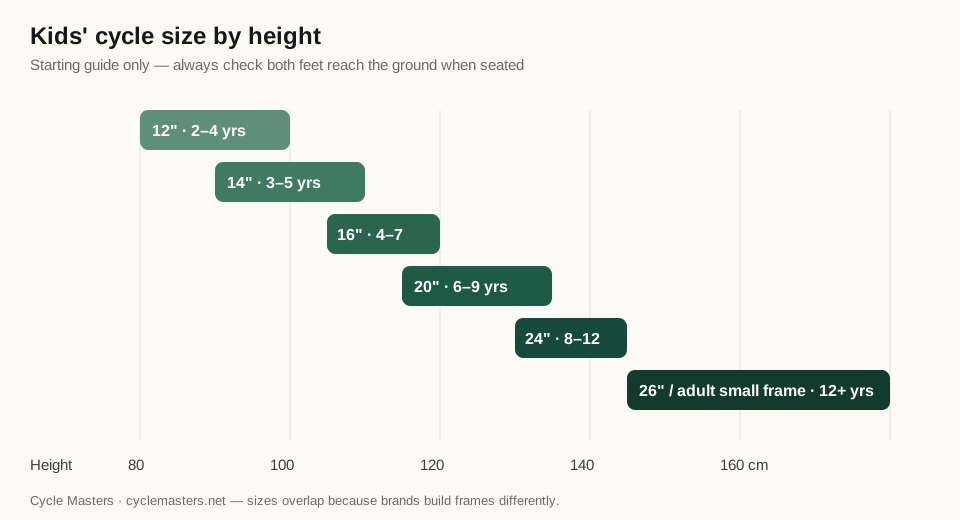 Kids' & baby cyclesCycle for Girls: Choosing the Right Size and StyleChoosing a cycle for girls in Pakistan, from toddlers to teens: sizes by age and height, step-through frames, comfort, safety and what really matters.Read guide →Sizes & fitCycle Size Chart: The Right Inch Size by Age and HeightCycle size chart for Pakistan: kids' wheel sizes (12 to 24 inch) by age and height, adult frame sizes by height, and a simple at-home fit test.Read guide →
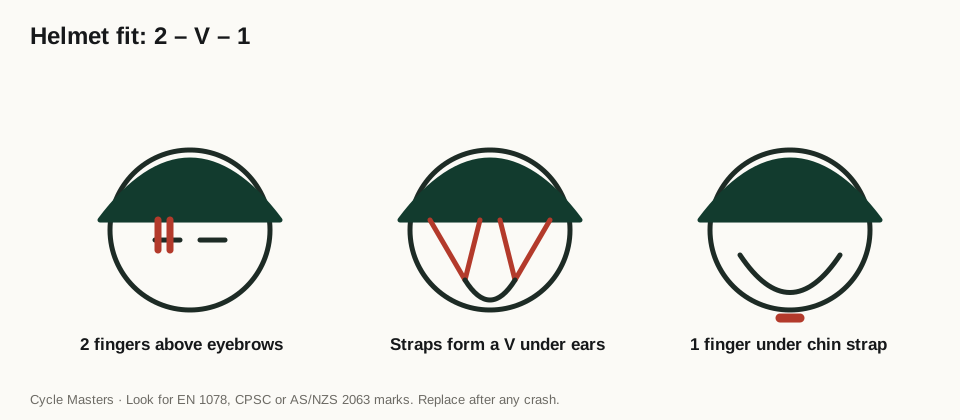 Parts & accessoriesCycle Helmet Guide: Choosing, Fitting and Replacing a Bicycle HelmetHow to choose a cycle helmet in Pakistan for adults and kids: safety standards to look for, the 2-finger fit test, ventilation for heat, and when to replace.Read guide →
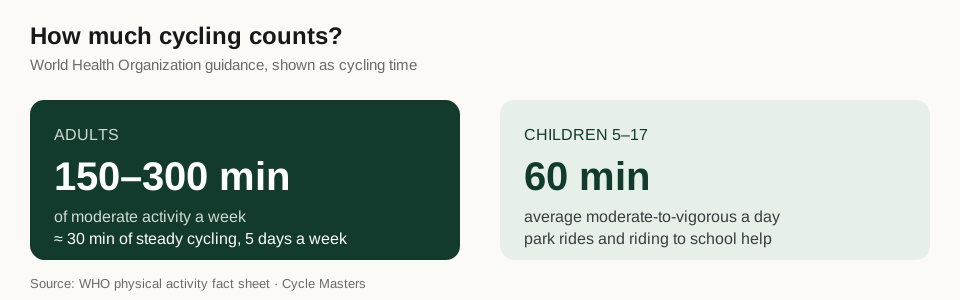 Riding in PakistanBenefits of Cycling: What Riding Regularly Does for Your HealthThe benefits of cycling for health, fitness, mood and everyday life, how much riding counts as enough, and how to start safely in Pakistan's heat and traffic.Read guide →