Cycle Frame Guide: Steel vs Aluminium vs Carbon, Sizes and Frame Types
The frame is the main body of a cycle that everything else attaches to. Aluminium (alloy) is the best choice for most riders — light, rust-resistant and affordable. Steel is cheaper, strong and comfortable but heavier; carbon is lightest and most expensive. Choose the frame size by your height and inside leg, and check frames for cracks and dents before buying used.
- Aluminium: best all-round
- Steel: cheap, heavy, comfy
- Carbon: lightest, priciest
- Size by height + inside leg
The frame is the heart of a cycle. It decides the weight, comfort, strength and size — and it's the part you can't easily upgrade later.
Frame parts
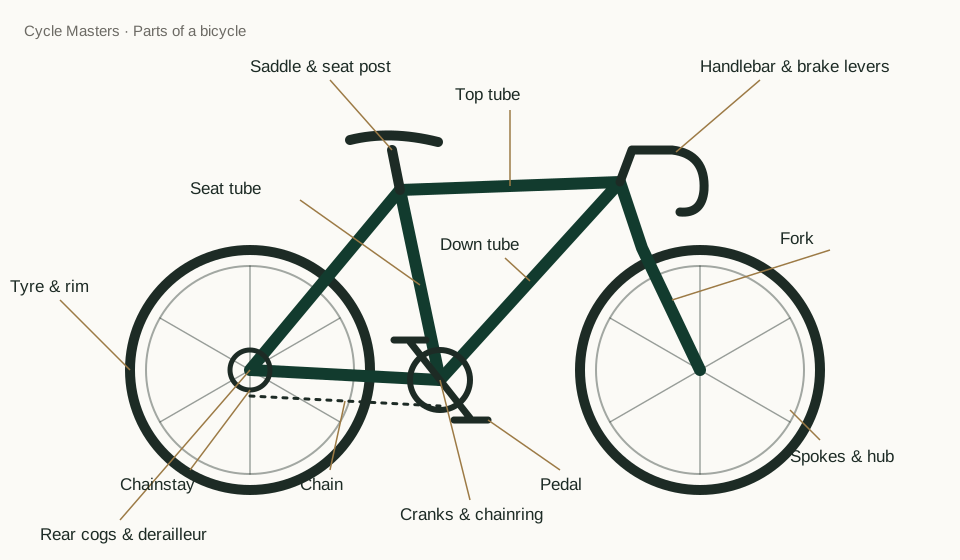
- Top tube — from the handlebar area to the seat.
- Down tube — from the handlebar area to the pedals; the strongest tube.
- Seat tube — holds the seat post.
- Head tube — holds the fork and steering.
- Chain stays and seat stays — the rear triangle holding the back wheel.
Frame materials compared
| Material | Weight | Rust | Ride | Price |
|---|---|---|---|---|
| High-tensile steel | Heavy | Can rust | Comfortable | Lowest |
| Chromoly steel | Medium | Can rust | Smooth, strong | Medium |
| Aluminium alloy | Light | No rust | Firm, responsive | Medium |
| Carbon fibre | Lightest | No rust | Stiff, tuned | Highest |
For Pakistani roads and budgets, aluminium is the sweet spot. Most budget cycles use high-tensile steel — fine for short rides but noticeably heavier.
Frame types
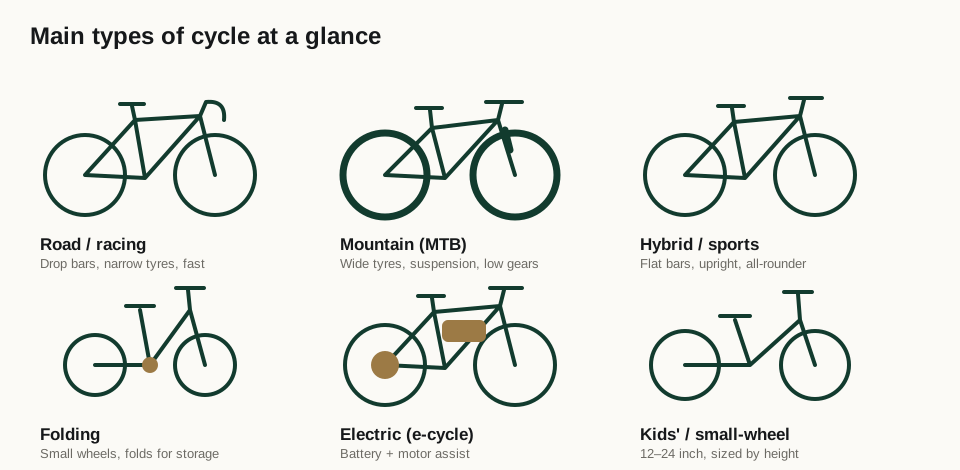
- Crossbar (diamond) frame — strongest and most common.
- Step-through frame — low or no top tube; easy to mount, popular for ladies', kids' and city cycles.
- Folding frame — hinged for storage; see folding cycles.
- Full-suspension MTB frame — rear shock; heavier and more complex.
Frame size
Frames come in sizes (XS–XL, or inches/cm on the seat tube). Size by height and inside leg, not wheel size. See the cycle size chart and saddle height guide.
Checking a frame (especially used)
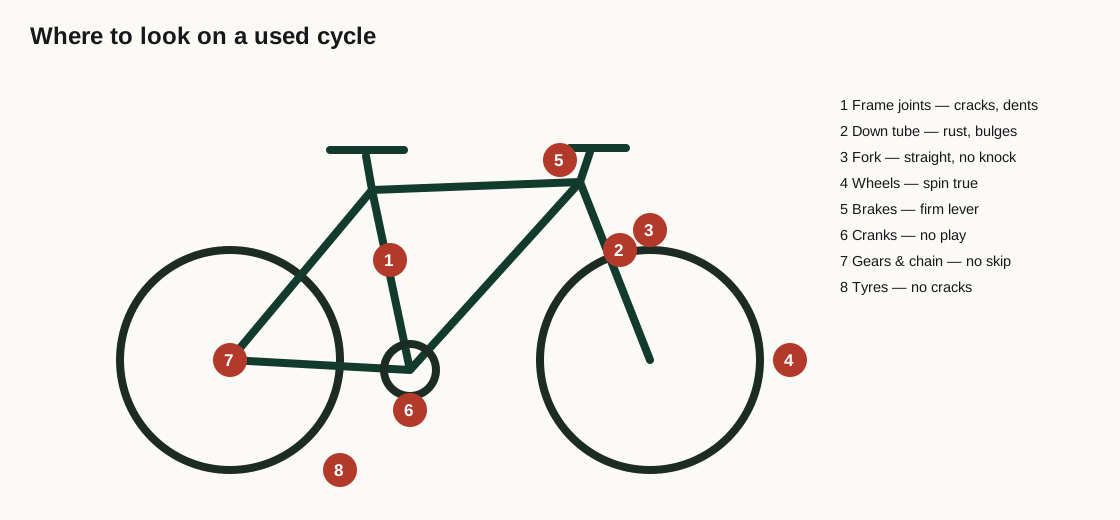
- Look for cracks around welds, the head tube and where the stays meet.
- Check for dents in the down tube and top tube.
- Look along the frame for bends after a crash.
- On steel, check for deep rust inside the seat tube (remove the seat post).
- Find the frame number under the bottom bracket — record it in case of theft.
Full checklist: buying a used cycle.
Buying a frame alone
Building a cycle from a bare frame is for experienced riders: you'll need matching fork, headset, bottom bracket and wheel standards. For most people, a complete cycle is better value. See best cycle in Pakistan.
Frequently asked questions
What is the frame in a cycle?
The frame is the main structure — top tube, down tube, seat tube, head tube and the rear stays — that holds the wheels, fork, saddle, cranks and handlebar.
Which cycle frame is best?
For most riders, aluminium: light, doesn't rust and good value. Steel suits budget and touring cycles; carbon suits racing where weight matters most.
Is an aluminium frame cycle better than steel?
Usually lighter and rust-free, which matters in humid or rainy places. Good steel frames ride smoothly and are easier to repair, but cheap steel frames are heavy.
How do I know my cycle frame size?
It's often printed on the seat tube (S, M, L or a number in inches or cm). Compare with your height and inside leg in a size chart.
Tell us the rider's height, age and budget — we'll recommend a bike, whether or not we stock it.
Related guides
Parts & accessoriesCycle Parts Names: Every Part of a Bicycle ExplainedCycle parts names explained in simple English: frame, fork, wheels, chain, derailleur, brakes, cranks and more — what each part does and when to replace it.Read guide →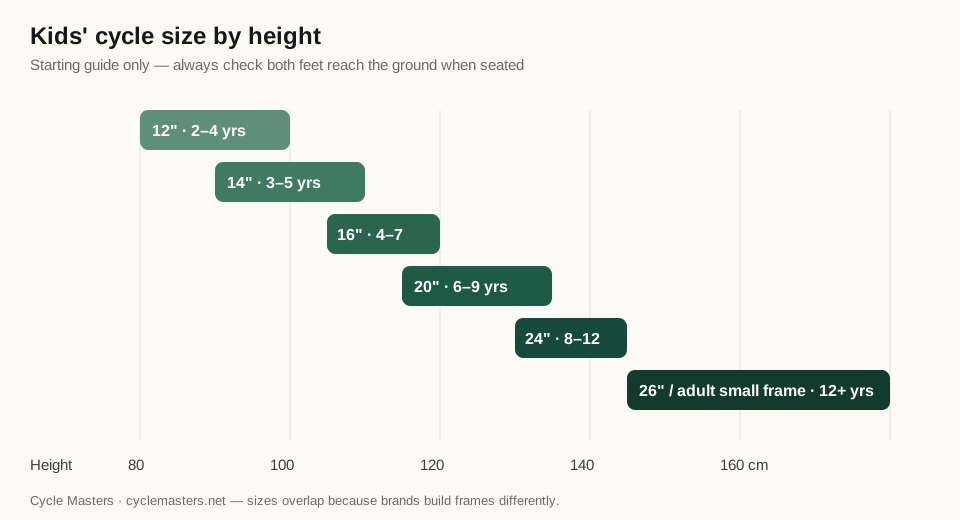 Sizes & fitCycle Size Chart: The Right Inch Size by Age and HeightCycle size chart for Pakistan: kids' wheel sizes (12 to 24 inch) by age and height, adult frame sizes by height, and a simple at-home fit test.Read guide →
 Buying guidesBuying a Used Cycle in Pakistan (OLX and Local): A Safe ChecklistHow to buy a used cycle on OLX or locally in Pakistan: what to check on the frame, wheels, brakes and gears, fair price tips, and how to meet sellers safely.Read guide →
 Buying guidesBest Cycle in Pakistan (2026): How to Choose the Right One for YouThere's no single best cycle in Pakistan — the best one fits your riding, height and budget. The best type for commuting, fitness, trails and kids.Read guide →