Pedal Cycle: What It Means, Types of Pedals and Pedal-Free Kids' Cycles
A pedal cycle is any cycle moved by pushing pedals — in other words, an ordinary bicycle (the term is used to separate it from motorised or electric bikes). Cycle pedals come in three main types: flat pedals for everyday riding, pedals with toe clips or straps, and clipless pedals that lock to special shoes. For young children, a pedal-less (balance) cycle is the easiest way to learn.
- Pedal cycle = ordinary bicycle
- Flat pedals suit most riders
- Left pedal: reverse thread
- Pedal-less cycles teach balance
"Pedal cycle" can mean two things in everyday search: the bicycle itself, or the pedals on it. This guide covers both — plus pedal-less cycles for children and pedal exercisers.
What is a pedal cycle? (pedal cycle vs bicycle)
A pedal cycle is a cycle that moves only by the rider pushing the pedals: a normal bicycle, tricycle or tandem. The term is used mainly to separate human-powered cycles from motorcycles, scooters and electric bikes. If you're comparing an ordinary cycle with an e-cycle, see our electric cycle guide.
Parts of the pedal system
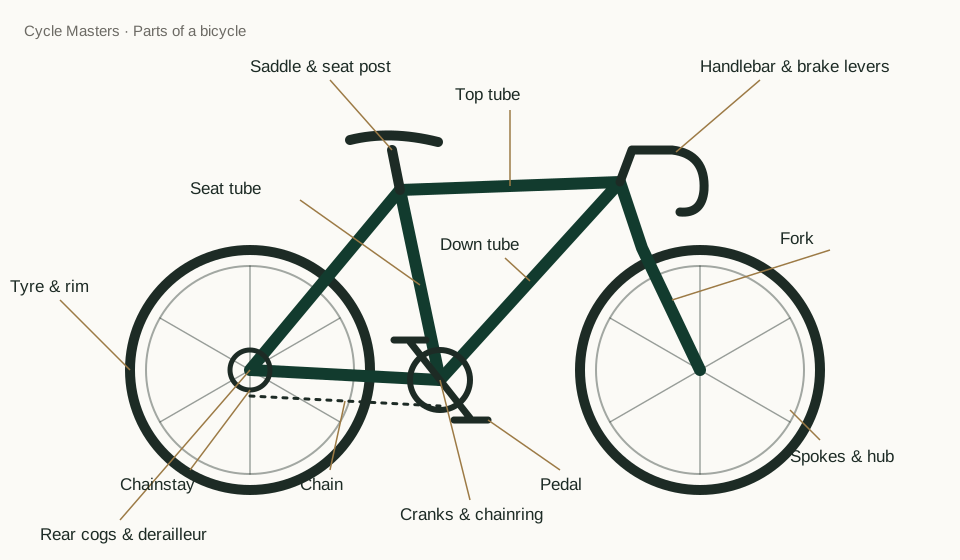
- Pedals — where your feet push.
- Crank arms (the pedal gear arms) — connect the pedals to the bottom bracket.
- Chainring — the toothed ring that drives the chain.
- Bottom bracket — the bearing the cranks spin on.
The full list is in our cycle parts names guide.
Types of cycle pedals
| Pedal type | Best for | Pros | Cons |
|---|---|---|---|
| Flat pedals (plastic or metal) | Everyday riding, kids, commuting | Work with any shoes, easy to put a foot down | Feet can slip in rain |
| Pedals with toe clips / straps | Fitness riders on a budget | Keep the foot in position | Harder to get out quickly |
| Clipless pedals (cleats) | Road and serious MTB riders | Efficient, secure | Need special shoes; practice needed |
| Pedal sets with reflectors | Night riding | Visible from behind and the side | — |
For most riders in Pakistan — on mixed roads, in traffic, in everyday shoes — good metal flat pedals are the best upgrade. They grip far better than the plastic pedals fitted to many budget cycles.
How to change cycle pedals
- Use a 15 mm pedal spanner (pedal wrench) (or the hex slot at the end of the axle, often 6 or 8 mm).
- Right pedal (chain side): unscrews anti-clockwise.
- Left pedal: has a reverse thread — it unscrews clockwise.
- Grease the threads of the new pedals. Pedals are marked R and L.
- Screw them in by hand first, then tighten firmly.
Common pedal problems
- Bent pedal rod (axle): replace the pedal — a bent axle wobbles and wears the crank.
- Clicking when pedalling: loose pedal, worn pedal bearings or loose crank bolt.
- Pedal arm (crank) wobbling: tighten the crank bolt; if it keeps loosening, see a mechanic.
- Pedal won't turn smoothly: the pedal bearing needs grease or the pedal needs replacing.
- Broken pedal on a kids' cycle: kids' cycles often use smaller 1/2-inch threads; adult cycles mostly use 9/16-inch. Check before buying replacements.
Pedal-less (pedal free) cycles for kids
A cycle without pedals — also sold as a pedal-less or pedal free cycle — a balance bike — is the easiest way for a toddler to learn. They push along with their feet, then glide. You can also remove the pedals from a small kids' cycle to use it the same way. See the balance cycle guide and how to teach a child to ride.
Pedal exercisers (physiotherapy pedal cycles)
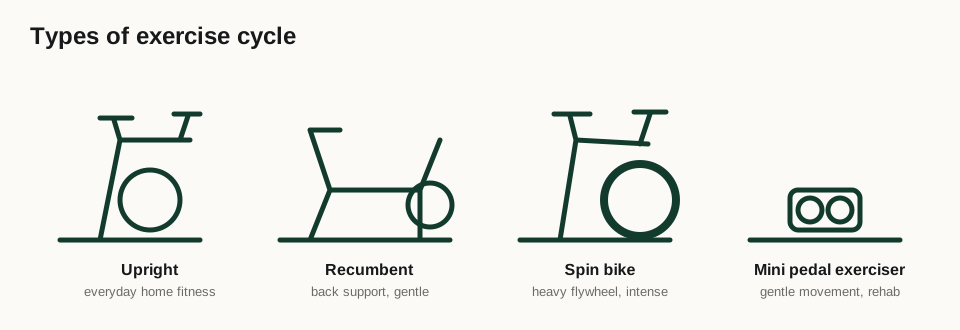
A mini pedal exerciser is a small frame with two pedals that you use sitting in a chair (for legs) or at a table (for arms). They are often used for gentle movement after surgery, for older people, or for desk workers. They are not a substitute for a medical plan — ask your doctor or physiotherapist how to use one safely. For full workouts, see our exercise cycle guide.
Frequently asked questions
What is a pedal cycle?
A pedal cycle is a cycle powered only by the rider pushing the pedals — a normal bicycle. In law and insurance the term distinguishes it from motorcycles and, often, from e-bikes.
What is the difference between a pedal cycle and a bicycle?
In everyday use, none: a bicycle is a pedal cycle. 'Pedal cycle' is a wider term that also includes tricycles and other human-powered cycles.
Which pedals are best for an MTB cycle?
Wide flat pedals with grippy pins suit most mountain bike riders. Experienced riders may use clipless MTB pedals (such as two-bolt cleat systems) for more control and efficiency.
How do I remove a cycle pedal?
Use a 15 mm pedal spanner or the hex key slot in the pedal axle. The right pedal unscrews anti-clockwise; the left pedal has a reverse thread and unscrews clockwise.
Are cycles without pedals good for kids?
Yes. Pedal-less balance cycles let toddlers learn balance and steering first. Most children who start on one move to a pedal cycle without needing training wheels.
What is a pedal cycle for physiotherapy?
It is a small pedal exerciser — two pedals on a stand — used seated at a chair or bed to keep legs or arms moving during recovery. Use one only as advised by your doctor or physiotherapist.
Tell us the rider's height, age and budget — we'll recommend a bike, whether or not we stock it.
Related guides
Parts & accessoriesCycle Parts Names: Every Part of a Bicycle ExplainedCycle parts names explained in simple English: frame, fork, wheels, chain, derailleur, brakes, cranks and more — what each part does and when to replace it.Read guide →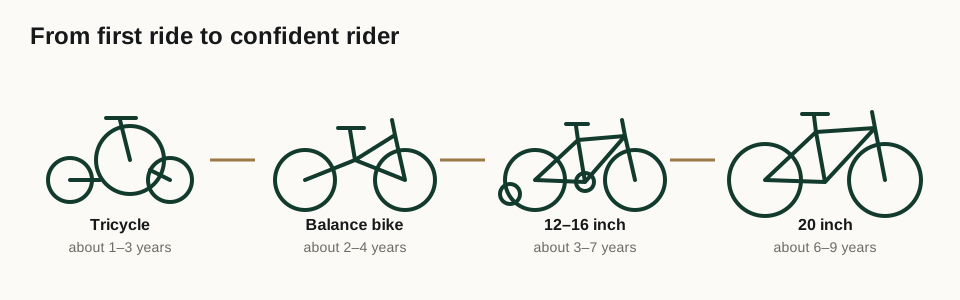 Kids' & baby cyclesBalance Bike (Balance Cycle) Guide: The Easiest Way to Learn to RideWhat a balance bike is, which age and size to choose, how children learn balance on one, and how anyone — child or adult — can learn to balance a cycle.Read guide →
 Types of cyclesExercise Cycle Guide: Types, Benefits and How to ChooseExercise cycles explained: upright, recumbent, spin bikes, air bikes and mini pedal exercisers — benefits, what to check before buying, and how to use one.Read guide →
 Maintenance & repairCycle Maintenance Basics: 7 Simple Jobs That Keep Your Bike RunningSimple cycle maintenance for Pakistani riders: tyre pressure, cleaning and oiling the chain, brake and gear checks, bolt checks, and when to see a mechanic.Read guide →