Cycle Wheel and Rim Guide: Sizes, Parts, Truing and Replacement
A cycle wheel is made of a hub (centre with bearings), spokes and a rim that holds the tyre. Common sizes are 12–24 inch for kids and 26, 27.5, 29 inch or 700c for adults. Double-wall alloy rims are stronger and stay straight longer than single-wall steel rims. A wobbling wheel can usually be trued by adjusting spoke tension; a cracked or badly dented rim should be replaced.
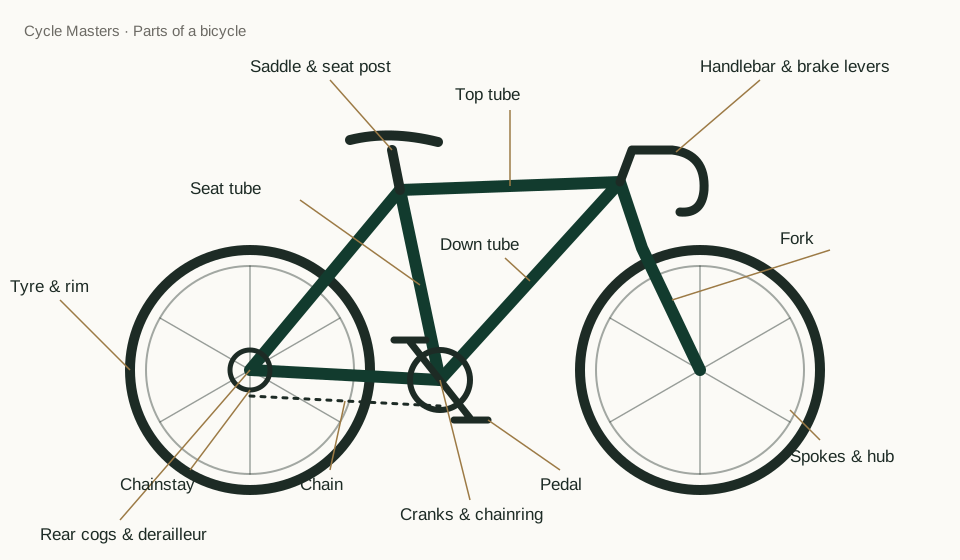
- Hub + spokes + rim
- Adult: 26/27.5/29/700c
- Double-wall alloy = stronger
- Wobble: true it; crack: replace
Wheels carry all your weight and take every pothole. Knowing the parts and sizes helps you buy the right replacements and spot problems early.
Parts of a wheel
- Hub — the centre, with bearings, attached by an axle nut or quick release.
- Spokes — thin steel rods connecting hub to rim; usually 28–36 per wheel.
- Rim — the outer hoop that holds the tyre.
- Tyre and tube — the rubber parts; see cycle parts names.
Wheel sizes
| Size | Rim (bead seat) | Used on |
|---|---|---|
| 12–20 inch | Various | Kids' cycles, BMX, folding |
| 24 inch | 507 mm | Older kids, small adults |
| 26 inch | 559 mm | Classic mountain and city cycles |
| 27.5 inch (650b) | 584 mm | Modern mountain bikes |
| 29 inch / 700c / "28 inch" | 622 mm | Hybrids, road bikes, 29er MTBs |
The bead seat diameter (in mm) is the number to match when buying rims or tyres. It's printed on the tyre sidewall, e.g. "ETRTO 50-559".
Rim types
- Single-wall steel — cheapest; dents and bends easily.
- Double-wall alloy — stronger, lighter, stays true; worth paying for.
- Disc-specific rims have no braking surface; rim-brake rims have machined sides.
Common wheel problems
| Problem | Sign | Fix |
|---|---|---|
| Wobble (out of true) | Wheel sways side to side when spun | True the spokes |
| Loose spoke | Rattling or pinging | Tighten / true |
| Broken spoke | Sudden wobble | Replace spoke and true |
| Loose hub bearings | Wheel moves sideways at the axle | Adjust or service hub |
| Dented / cracked rim | Bump when braking, visible damage | Replace rim or wheel |
Replacing a wheel or rim
Take the old wheel to a shop and match: size, axle type (nutted or quick release), brake type (rim or disc), gear type (freewheel or cassette) and spoke count. Often replacing the whole wheel is cheaper than rebuilding with a new rim.
Colourful and light-up wheels
Coloured rims and spoke LEDs are popular on kids' and BMX cycles — fun, but check they're the right size and the rims are solid. See cycle lights.
Keep wheels healthy with the checks in maintenance basics.
Frequently asked questions
What is a cycle rim?
The rim is the outer metal hoop of the wheel that holds the tyre. On rim-brake cycles, the brake pads grip its sides.
Is 700c the same as 28 inch?
Practically yes — 700c and '28 inch' wheels share the same 622 mm rim size. 29-inch mountain bike wheels also use 622 mm rims with wider tyres.
How do I fix a wobbly cycle wheel?
Small wobbles are fixed by 'truing' — tightening and loosening spokes with a spoke key. It takes practice; a cycle shop can do it quickly.
When should a cycle rim be replaced?
If it's cracked, badly dented, or the braking surface is worn concave (on rim-brake cycles). Many rims have a wear-indicator groove.
Tell us the rider's height, age and budget — we'll recommend a bike, whether or not we stock it.
Related guides
Parts & accessoriesCycle Parts Names: Every Part of a Bicycle ExplainedCycle parts names explained in simple English: frame, fork, wheels, chain, derailleur, brakes, cranks and more — what each part does and when to replace it.Read guide → Cycle prices in Pakistan26 Inch Cycle Price in Pakistan (2026): New, Used and Gear CyclesWhat a 26 inch cycle costs in Pakistan in 2026 — new, used and gear models — who a 26 inch cycle fits, and what to check before buying.Read guide →
 Maintenance & repairCycle Maintenance Basics: 7 Simple Jobs That Keep Your Bike RunningSimple cycle maintenance for Pakistani riders: tyre pressure, cleaning and oiling the chain, brake and gear checks, bolt checks, and when to see a mechanic.Read guide →Parts & accessoriesDisc Brake Cycle Guide: Mechanical vs Hydraulic, Repair and MaintenanceWhat a disc brake on a cycle is, mechanical vs hydraulic disc brakes, disc vs V-brakes, fixing rubbing and squealing discs, and replacing pads.Read guide →