Cycle Handlebar Guide: Types, Height, Width and Grips
The cycle handlebar sets your riding position: flat and riser bars (mountain and hybrid) give control, drop bars (road bikes) offer several hand positions for speed, and upright/swept-back bars (city and ladies' cycles) give a relaxed, comfortable posture. Raise the bar for comfort, lower it for speed, and keep it lined up with the front wheel and tight.
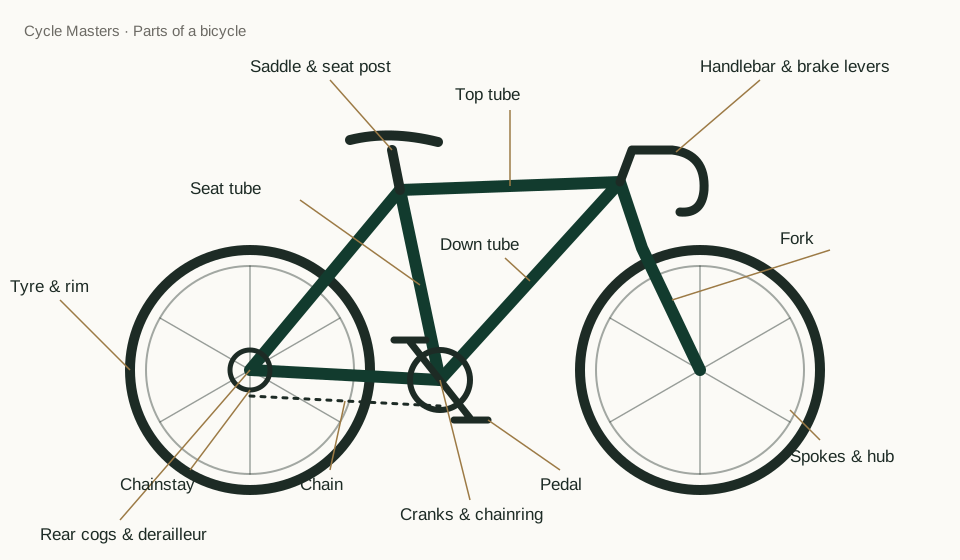
- Flat/riser: control
- Drop: speed, many hand positions
- Upright: comfort
- Keep aligned and tight
Your handlebar decides how you sit, how the cycle steers and how comfortable your hands, wrists and back feel. Here's how to choose and set it up.
Types of handlebars
| Type | Found on | Feel |
|---|---|---|
| Flat (straight) bar | Hybrids, some MTBs | Direct, controlled |
| Riser bar | Mountain bikes | Wider, a little higher, more control |
| Drop bar | Road and racing bikes | Low, fast, several hand positions |
| Upright / swept-back | City, ladies' and classic cycles | Relaxed, upright posture |
| BMX bar | BMX and stunt cycles | Tall, braced, strong |
Height and reach
- Higher bar = more upright, more comfortable, better view of traffic.
- Lower bar = more aerodynamic and sporty, more weight on hands.
- Wider bar = more control on rough ground; narrower = easier in traffic.
Start with the bar roughly level with the saddle and adjust from there. See the saddle height guide.
Adjusting and tightening
- Line it up: stand over the front wheel and align the bar at 90° to the wheel.
- Tighten the stem bolts evenly (threadless stems have side bolts; quill stems one top bolt).
- Angle: rotate the bar so your wrists are straight when holding the grips; tighten the clamp bolts on the stem face evenly.
- Brake levers: angle them so your fingers fall naturally onto the levers.
Grips and covers
- Ergonomic grips with a palm platform reduce numb hands.
- Lock-on grips don't slip when wet.
- Foam covers are soft and cheap; replace when they tear.
- Bar tape on drop bars should be replaced when worn.
Handlebar accessories
Bell, lights, phone mount, mirror and computer all clamp to the bar — check the diameter at each spot. See cycle accessories.
Kids' cycles
Many kids' cycles have a parent push handle (the "long handle") on tricycles and small cycles. Remove it once your child steers confidently. Raise the handlebar post as your child grows.
Other parts explained in cycle parts names.
Frequently asked questions
How do I tighten a loose cycle handle?
Stand over the front wheel, line the handlebar up with the wheel, and tighten the stem bolts with a hex key — on threadless stems, the two side bolts; on older quill stems, the single top bolt. Test by holding the wheel between your knees and twisting the bar.
How do I raise my cycle handlebar?
Quill stems: loosen the top bolt, tap it down, raise the stem (not past the minimum mark), retighten. Threadless stems: move spacers from above to below the stem, or fit a stem with more rise.
Which handlebar is best for comfort?
An upright or swept-back bar, or a riser bar set level with the saddle, with ergonomic grips. Leaning less puts less weight on your hands.
What is a long handle on a kids' cycle?
Usually a parent push handle — a removable bar on tricycles and small cycles that lets an adult steer and push.
Tell us the rider's height, age and budget — we'll recommend a bike, whether or not we stock it.
Related guides
Parts & accessoriesCycle Parts Names: Every Part of a Bicycle ExplainedCycle parts names explained in simple English: frame, fork, wheels, chain, derailleur, brakes, cranks and more — what each part does and when to replace it.Read guide →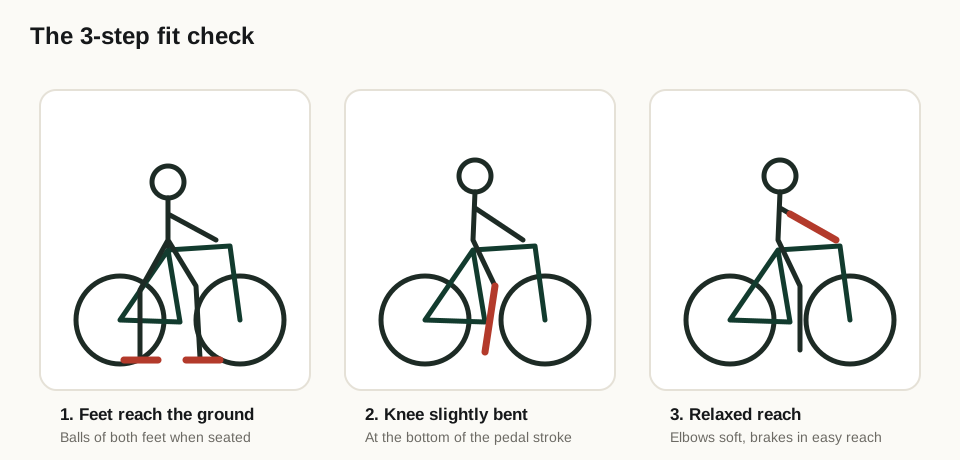 Sizes & fitHow to Set Cycle Seat (Saddle) Height and Measure Inside LegHow to set the right cycle seat height for adults and kids, how to measure inside leg for frame size, and the signs your saddle is too high or too low.Read guide →Parts & accessoriesCycle Bell: Types, Fitting and How to Fix a Bell That Won't RingChoosing a cycle bell (ding-dong, ring, mini, electronic horn), fitting it to your handlebar, using it politely, and fixing a cycle bell that doesn't ring.Read guide →
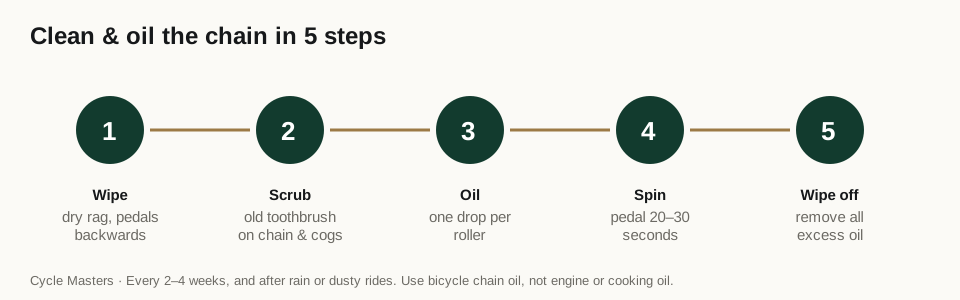 Maintenance & repairCycle Maintenance Basics: 7 Simple Jobs That Keep Your Bike RunningSimple cycle maintenance for Pakistani riders: tyre pressure, cleaning and oiling the chain, brake and gear checks, bolt checks, and when to see a mechanic.Read guide →